

Caută
Selectați limba dicționarului





























to diverge
01
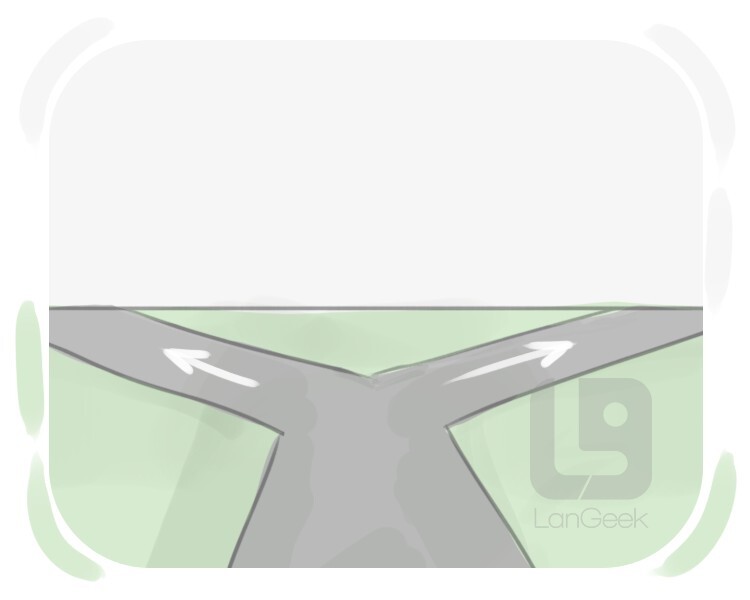
a diverge, a se despărți
to move apart and continue in another direction
Intransitive
informații gramaticale
compoziție morfologică
derivat
verb de mișcare
regulat
timpul prezent
diverge
persoana a III-a singular
diverges
participiu prezent
diverging
trecut simplu
diverged
participiu trecut
diverged
Exemple
As the river flowed downstream, it began to diverge into smaller tributaries.
Pe măsură ce râul curgea în aval, a început să se despartă în afluenți mai mici.
02
a diverge, a se abate
to deviate or move away from an established path or norm
Intransitive: to diverge from a norm
Exemple
The company decided to diverge from traditional marketing strategies and explore innovative digital campaigns.
Compania a decis să se abată de la strategiile tradiționale de marketing și să exploreze campanii digitale inovatoare.
03
a diverge, a diferi
(of views, opinions, etc.) to be different from each other
Intransitive
Exemple
During the debate, the candidates' views began to diverge on key economic policies.
În timpul dezbaterii, opiniile candidaților au început să diverghe pe politicile economice cheie.
04
a diverge, a nu converge
(of a mathematical sequence or series) to not have a finite limit
Intransitive
Exemple
The infinite series 1 + 2 + 3 + 4 + ... diverges because it doesn't have a finite sum.
Seria infinită 1 + 2 + 3 + 4 + ... diverge deoarece nu are o sumă finită.
LanGeek
Descarcă aplicația noastră mobilă

Arbore Lexical
divergence
divergent
diverging
diverge

