

Caută
Selectați limba dicționarului





























Tide
01
maree
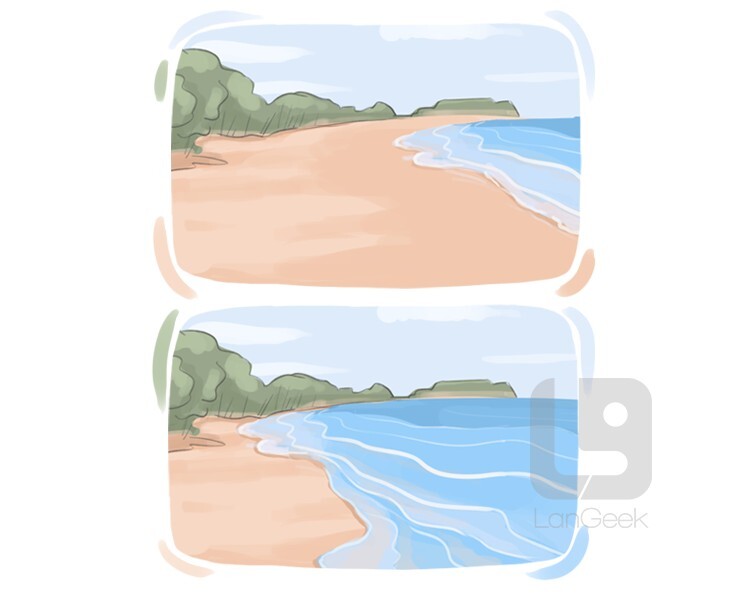
the rise and fall of the sea level, which happens regularly, as a result of the attraction of the sun and moon
informații gramaticale
statut de animatitate
inanimat
compoziție morfologică
simplu
nenumărabil
singular
not gender specific
formă de plural
tides
Exemple
Fishermen need to be aware of the tide schedule to ensure their boats are safely docked.
Pescarii trebuie să fie conștienți de programul mareelor pentru a se asigura că bărcile lor sunt ancorate în siguranță.
02
flux, val
something that fluctuates or changes in intensity
Exemple
There is a tide of enthusiasm for the new project.
Val de entuziasm pentru noul proiect.
03
maree, curent
a flowing stream or current, particularly in large bodies of water like oceans or seas
Exemple
The tide carried driftwood along the shore.
Marea a transportat lemn plutitor de-a lungul țărmului.
04
curent, tendință
the general trend or movement in public opinion, social attitudes, or events
Exemple
A tide of support for the candidate developed overnight.
Un val de sprijin pentru candidat s-a dezvoltat peste noapte.
to tide
01
urca, înainta
to rise, advance, or move forward, often gradually or steadily
informații gramaticale
compoziție morfologică
simplu
verb de mișcare
regulat
timpul prezent
tide
persoana a III-a singular
tides
participiu prezent
tiding
trecut simplu
tided
participiu trecut
tided
Exemple
The economy is tiding upward after months of decline.
Economia maree în sus după luni de declin.
02
a deriva, a fi purtat de curent
to be carried along by the current
Exemple
Driftwood tidied toward the shore.
Lemnul plutitor curgea spre mal.
03
a duce, a pluti
to cause something to float or move along with the tide
Exemple
Workers tidied the logs downriver.
Muncitorii au făcut buștenii să plutească în aval.
LanGeek
Descarcă aplicația noastră mobilă
Arbore Lexical
tidal
undertide
tide

