

Szukaj





























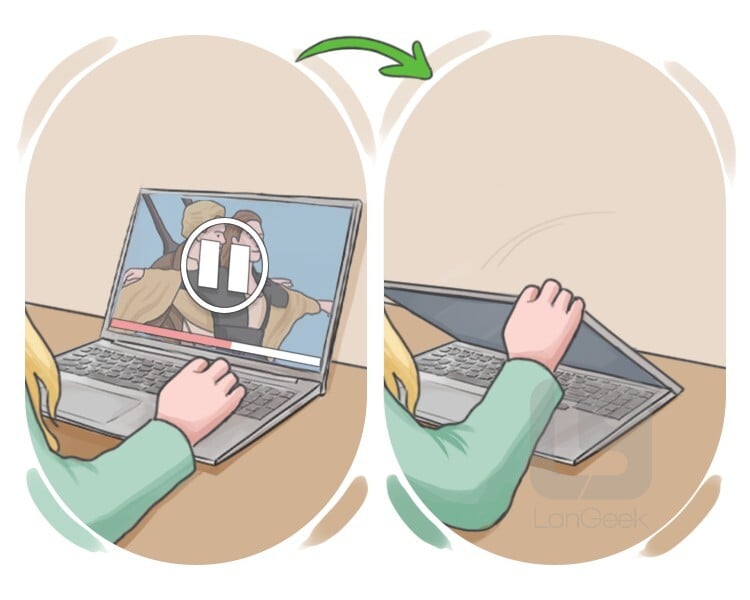
to leave off
01
przestać, zakończyć
to conclude or cease, often in an abrupt or incomplete manner
Intransitive: to leave off | to leave off with sth
informacje gramatyczne
budowa morfologiczna
frazowe
czasownik czynnościowy
regularny
nierozdzielny
partykuła
off
czasownik podstawowy
leave
czas teraźniejszy
leave off
3. osoba liczby pojedynczej
leaves off
imiesłów czynny
leaving off
czas przeszły prosty
left off
imiesłów bierny
left off
Przykłady
The story leaves off with the protagonist facing an uncertain future, leaving readers eager for the sequel.
Historia kończy się, gdy protagonista staje przed niepewną przyszłością, pozostawiając czytelników w oczekiwaniu na kontynuację.
02
pominąć, wykluczyć
to exclude someone or something from a list, consideration, or selection
Transitive: to leave off sb/sth
Przykłady
The organizers left my name off from the invitation list, causing me to miss the event.
Organizatorzy pominęli moje nazwisko na liście zaproszeń, przez co przegapiłem wydarzenie.
03
zaprzestać, przerwać
to discontinue the use or consumption of something
Transitive: to leave off sue or consumption of something
Przykłady
The doctor advised me to leave off smoking, as it was detrimental to my health.
Lekarz poradził mi rzucić palenie, ponieważ szkodziło to mojemu zdrowiu.
04
przestać, zaprzestać
to discontinue an activity, either temporarily or permanently
Intransitive
Transitive: to leave off an activity
Przykłady
Please leave off your incessant chatter and focus on the task at hand.
Proszę przestań swoje nieustanne gadanie i skup się na zadaniu.
LanGeek


