

Search
Select the dictionary language





























to leave off
01
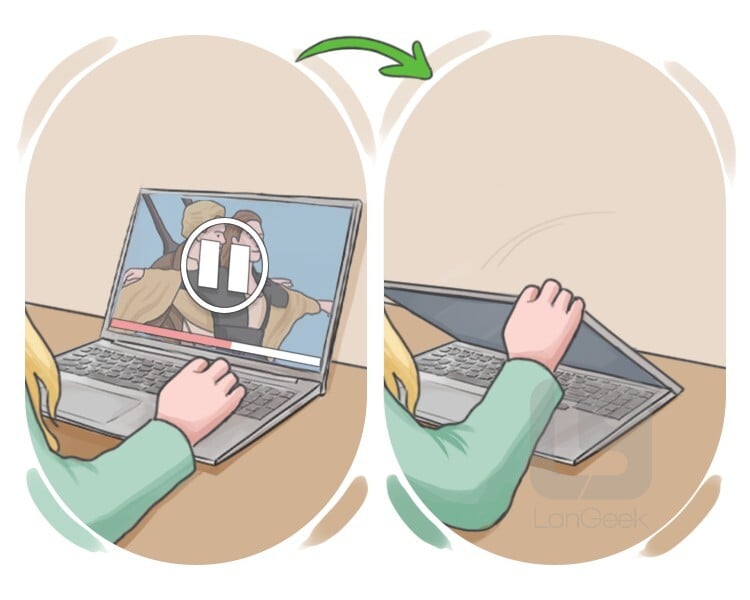
to conclude or cease, often in an abrupt or incomplete manner
Intransitive: to leave off | to leave off with sth
Grammatical Information
Composition
phrasal
Action verb
Regular
Inseparable
Particle
off
Base verb
leave
Present tense
leave off
3rd person singular
leaves off
Present participle
leaving off
Past simple
left off
Past participle
left off
Examples
The story leaves off with the protagonist facing an uncertain future, leaving readers eager for the sequel.
02
to exclude someone or something from a list, consideration, or selection
Transitive: to leave off sb/sth
Examples
The organizers left my name off from the invitation list, causing me to miss the event.
03
to discontinue the use or consumption of something
Transitive: to leave off sue or consumption of something
Examples
The doctor advised me to leave off smoking, as it was detrimental to my health.
04
to discontinue an activity, either temporarily or permanently
Intransitive
Transitive: to leave off an activity
Examples
Please leave off your incessant chatter and focus on the task at hand.
LanGeek


