

Search
Select the dictionary language





























to journey on foot, often covering great distances with a sense of purpose or exploration
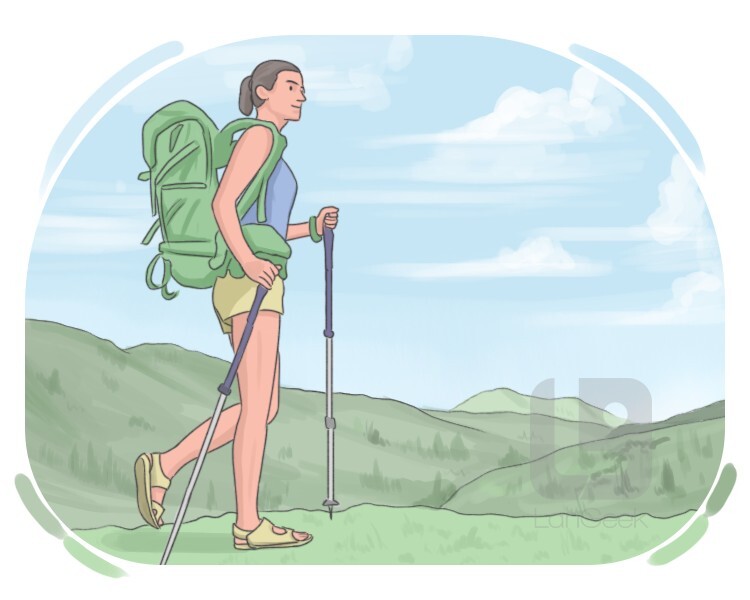
walk heavily and firmly, as when weary, or through mud
move about aimlessly or without any destination, often in search of food or employment
cross on foot
a person who has no home and wanders from place to place

a long walk usually for exercise or pleasure
a commercial steamer for hire; one having no regular schedule
a heavy footfall
a woman regarded as sexually promiscuous or immoral
What is the origin of the term "tramp" and how is it used?
Tramp originally meant a person who travels on foot, especially someone who wanders or begs, and dates back to the 16th–17th century in English. By the late 19th and early 20th centuries, the word began to be applied metaphorically to women, implying they "wander" sexually or lack moral restraint. This shift likely played on the sense of aimless movement, linking it to promiscuity. In this sense, it has been used mainly by men or society at large to shame women and enforce sexual norms. It is strongly derogatory and remains offensive in almost all contemporary contexts.
a foot traveler; someone who goes on an extended walk (for pleasure)
LanGeek
Download Our Mobile App

Lexical Tree

