

Search
Select the dictionary language





























to move on
01
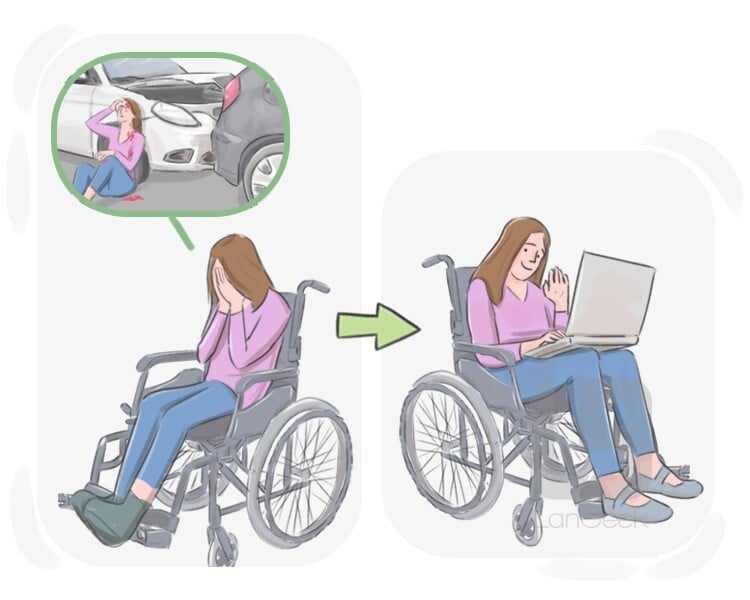
to accept a change or a new situation and be ready to continue with one's life and deal with new experiences, especially after a bad experience such as a breakup
Intransitive: to move on | to move on from an experience
Grammatical Information
Composition
phrasal
Action verb
Regular
Inseparable
Particle
on
Base verb
move
Present tense
move on
3rd person singular
moves on
Present participle
moving on
Past simple
moved on
Past participle
moved on
Examples
After the divorce, she took time to heal and eventually found the strength to move on.
02
to depart or leave a specific location
Intransitive

Examples
She quickly moved on after realizing the store was closed.
03
to transition or shift to a different topic or activity
Intransitive: to move on to a different topic
Examples
After finishing the first part of the presentation, they decided to move on to the next agenda item.
04
(particularly of law enforcement) to instruct individuals to leave or distance themselves from a specific location
Transitive: to move on sb
Examples
The police arrived and had to move the onlookers on to ensure the safety of the accident site.
LanGeek


