

Искать





























masculine
01
мужественный
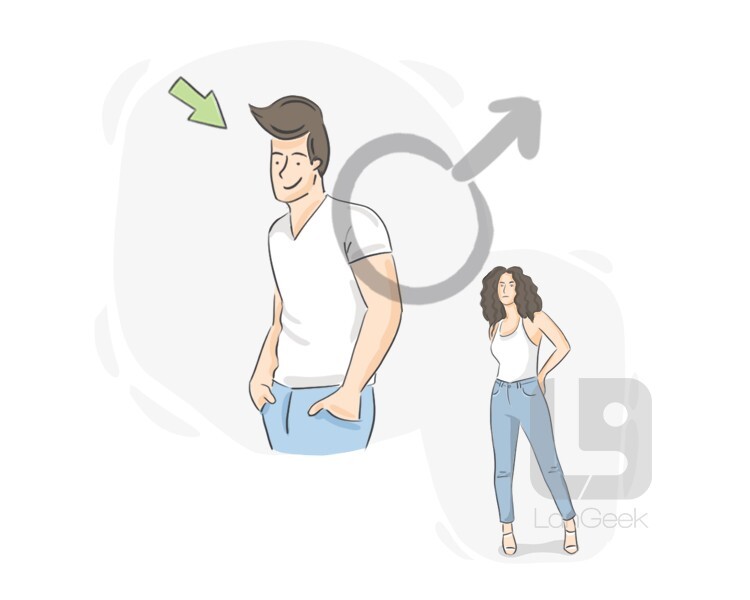
related to qualities, characteristics, or behaviors typically associated with men
Примеры
The masculine physique of the bodybuilder was evident in his strong muscles and broad shoulders.
Мужская фигура бодибилдера была очевидна в его сильных мышцах и широких плечах.
02
мужской род
(of a language's grammar) referring to males
грамматическая информация
морфологический состав
простое
относительное
неградуируемое
область
grammar, gender, linguistics
Примеры
In languages with grammatical gender, such as Spanish or French, nouns like ' el libro' (the book) or 'le garçon' (the boy) are classified as masculine.
В языках с грамматическим родом, таких как испанский или французский, существительные, такие как 'el libro' (книга) или 'le garçon' (мальчик), классифицируются как мужские.
03
мужской, мужское окончание
ending on a stressed beat in music or a stressed syllable in poetry
Примеры
The march concluded with a masculine ending.
Марш завершился мужским окончанием.
Masculine
01
мужской род
a grammatical or social gender typically associated with male persons or male-classified objects
грамматическая информация
статус одушевлённости
абстрактное
морфологический состав
составное
исчисляемое
singular
not gender specific
форма множественного числа
masculines
Примеры
In French, "homme" is a masculine.
Во французском языке "homme" — это мужской род.
LanGeek


