Pesquisar
Selecione o idioma do dicionário





























to move on
01
seguir em frente, superar
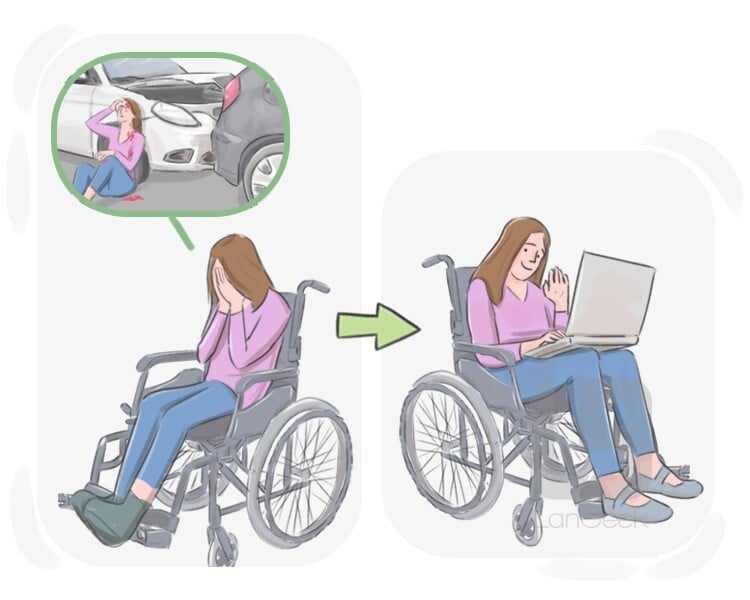
to accept a change or a new situation and be ready to continue with one's life and deal with new experiences, especially after a bad experience such as a breakup
Intransitive: to move on | to move on from an experience
informações gramaticais
composição morfológica
frasal
verbo de ação
regular
inseparável
partícula
on
verbo base
move
presente
move on
3.ª pessoa do singular
moves on
particípio presente
moving on
pretérito simples
moved on
particípio passado
moved on
Exemplos
After the divorce, she took time to heal and eventually found the strength to move on.
Após o divórcio, ela levou um tempo para se curar e acabou encontrando a força para seguir em frente.
02
seguir em frente, partir
to depart or leave a specific location
Intransitive

Exemplos
She quickly moved on after realizing the store was closed.
Ela seguiu em frente rapidamente depois de perceber que a loja estava fechada.
03
passar para, seguir em frente
to transition or shift to a different topic or activity
Intransitive: to move on to a different topic
Exemplos
After finishing the first part of the presentation, they decided to move on to the next agenda item.
Depois de terminar a primeira parte da apresentação, eles decidiram passar para o próximo item da agenda.
04
fazer circular, deslocar
(particularly of law enforcement) to instruct individuals to leave or distance themselves from a specific location
Transitive: to move on sb
Exemplos
The police arrived and had to move the onlookers on to ensure the safety of the accident site.
A polícia chegou e teve que afastar os espectadores para garantir a segurança do local do acidente.
LanGeek