

Szukaj





























diminutive
informacje gramatyczne
budowa morfologiczna
złożenie
jakościowy
stopień najwyższy
most diminutive
stopień wyższy
more diminutive
stopniowalne
dziedzina
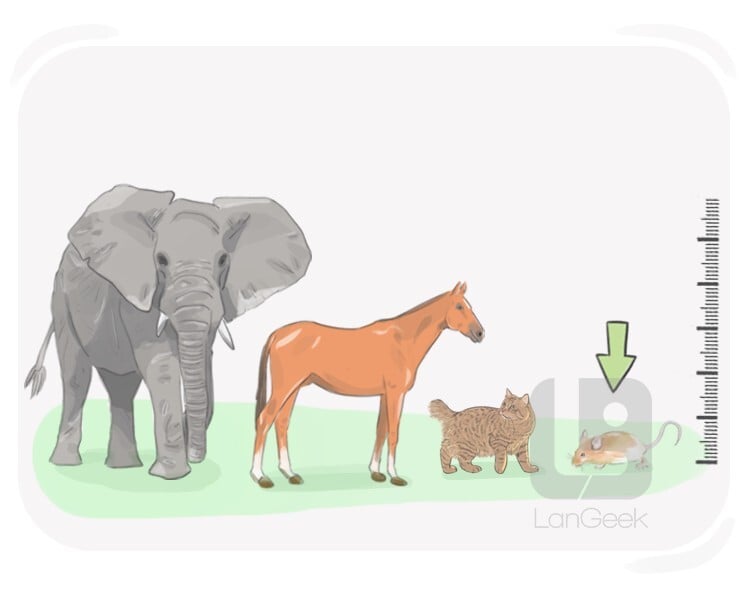
size, appearance, scale
Przykłady
The diminutive kitten curled up in the corner, its tiny frame emitting soft purrs.
Malutki kotek skulił się w kącie, jego małe ciałko wydawało ciche mruczenie.
02
zdrobniały, mały
(of a name, suffix, or grammatical form) indicating smallness or a lesser degree, often used to convey affection
Przykłady
The diminutive form "duckling" uses the suffix "-ling" to denote a young or small duck.
Forma zdrobniała "duckling" używa przyrostka "-ling" do oznaczenia młodej lub małej kaczki.
Diminutive
01
zdrobnienie, słowo pieszczotliwe
a word form or affix that is added to a base word to express smallness, endearment, or a sense of familiarity
informacje gramatyczne
status żywotności
abstrakcyjny
budowa morfologiczna
złożenie
policzalny
singular
not gender specific
forma liczby mnogiej
diminutives
Przykłady
The word “duckling” is a diminutive of “duck.”
Słowo „kaczątko” jest zdrobnieniem słowa „kaczka”.
LanGeek
Pobierz naszą aplikację mobilną

Drzewo Leksykalne
diminutiveness
diminutive
diminish

