






























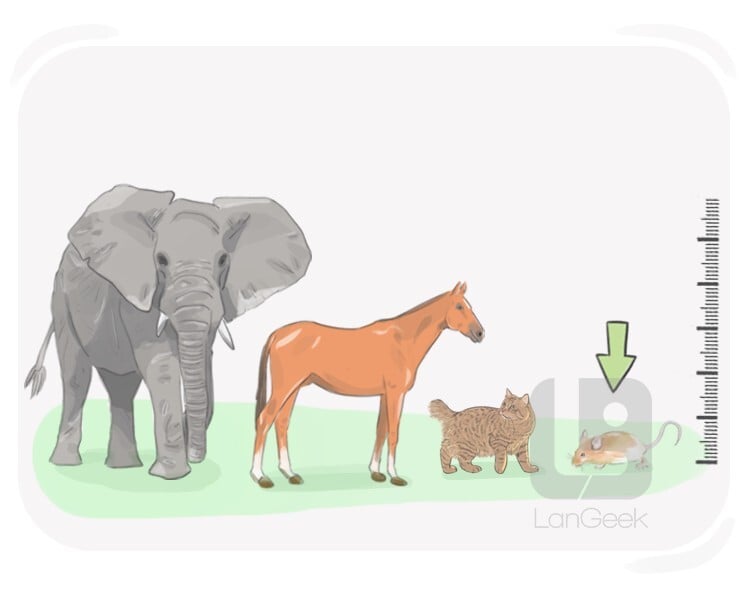
diminutive
语法信息
形态构成
复合词
性质形容词
最高级
most diminutive
比较级
more diminutive
可分级
领域
size, appearance, scale
例子
The diminutive kitten curled up in the corner, its tiny frame emitting soft purrs.
娇小的小猫蜷缩在角落里,它的小身躯发出轻柔的呼噜声。
02
指小词, 小的
(of a name, suffix, or grammatical form) indicating smallness or a lesser degree, often used to convey affection
例子
The diminutive form "duckling" uses the suffix "-ling" to denote a young or small duck.
指小形式 "duckling" 使用后缀 "-ling" 来表示小鸭子。
Diminutive
01
指小词, 爱称
a word form or affix that is added to a base word to express smallness, endearment, or a sense of familiarity
语法信息
有生性状态
抽象
形态构成
复合词
可数
singular
not gender specific
复数形式
diminutives
例子
The word “duckling” is a diminutive of “duck.”
“小鸭”这个词是“鸭”的指小词。
LanGeek
下载我们的移动应用
词汇树
diminutiveness
diminutive
diminish

