
to leave off
[phrase form: leave]
01
멈추다, 끝내다
to conclude or cease, often in an abrupt or incomplete manner
Intransitive: to leave off | to leave off with sth
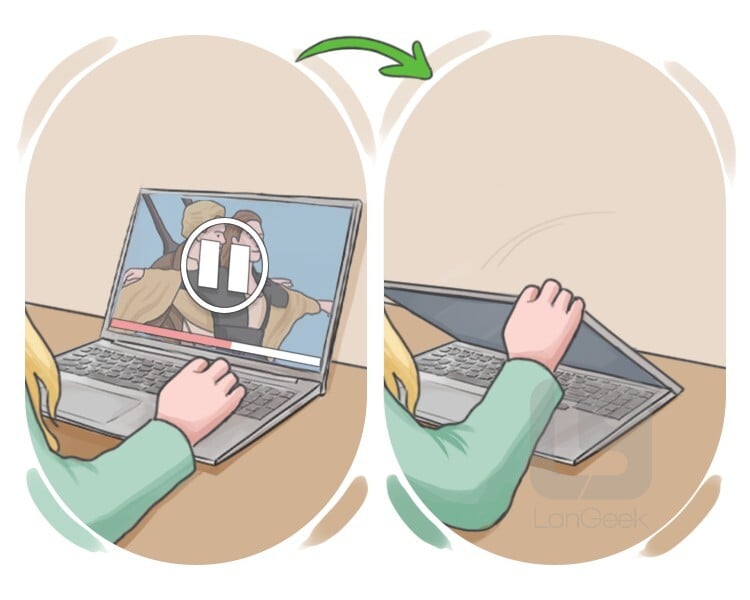

예시들
The meeting left off with a sense of urgency, as the team was tasked with completing a critical project by the end of the week.
회의는 팀이 주말까지 중요한 프로젝트를 완료해야 했기 때문에 긴박감을 느끼며 끝났습니다.
02
제외하다, 빼다
to exclude someone or something from a list, consideration, or selection
Transitive: to leave off sb/sth
예시들
The company left off several qualified candidates from the interview process due to biases and prejudices.
그 회사는 편견과 선입관으로 인해 면접 과정에서 몇몇 자격을 갖춘 후보자들을 제외시켰습니다.
03
그만두다, 중단하다
to discontinue the use or consumption of something
Transitive: to leave off sue or consumption of something
예시들
The fashion industry is constantly leaving off outdated trends and embracing new styles.
패션 산업은 끊임없이 구식 트렌드를 중단하고 새로운 스타일을 받아들입니다.
04
그만두다, 중단하다
to discontinue an activity, either temporarily or permanently
Intransitive
Transitive: to leave off an activity
예시들
The exhausted hiker left off their ascent of the mountain, deciding to return to the base camp for the night.
지친 하이커는 산 오르기를 중단하고 밤을 보내기 위해 베이스 캠프로 돌아가기로 결정했다.