






























Exit
01
出口
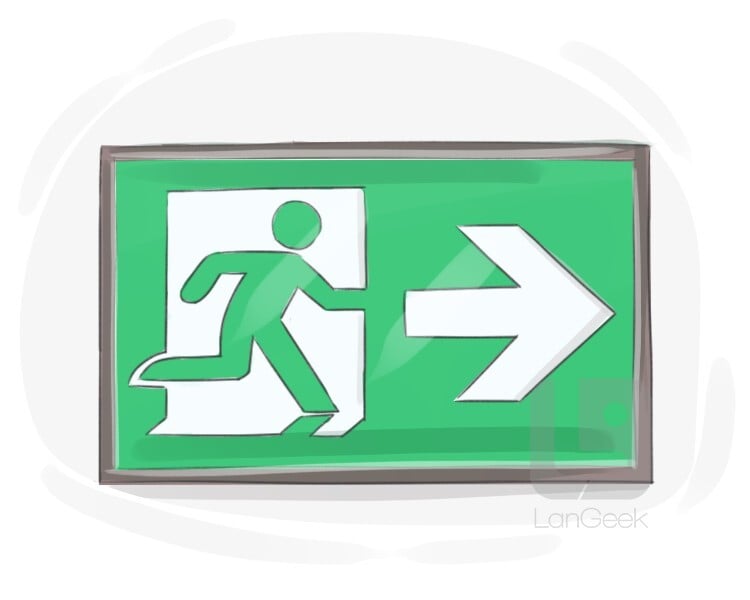
a way that enables someone to get out of a room, building, or a vehicle of large capacity
文法情報
有生性の状態
無生物
形態的構成
単純語
可算
singular
not gender specific
複数形
exits
例
In case of an emergency, please locate the nearest exit and follow the evacuation signs.
緊急時には、最寄りの出口を見つけ、避難標識に従ってください。
02
出口, 退出路
a part of a road through which vehicles can move on to another

例
She took the exit to the city center to reach her destination.
彼女は目的地に到着するために市中心部への出口を取った。
2.1
出口, インターチェンジ
(New Jersey) a way of giving directions or identifying location by referencing a highway or turnpike exit number
例
He said he's from Exit 9 on the Turnpike.
彼はターンパイクの出口9から来たと言った。
03
退場, 舞台からの退出
the act of leaving the stage by an actor
例
The actor made a dramatic exit at the end of the scene.
俳優はシーンの終わりに劇的な退場をした。
04
出口
the act of going out or leaving a place
例
She made a quick exit from the meeting room when the fire alarm sounded.
火災報知器が鳴ったとき、彼女は会議室から素早く退出した。
05
退去, 逝去
the act of leaving life
婉曲的
例
His sudden exit shocked the entire community.
彼の突然の退去はコミュニティ全体を震撼させた。
to exit
01
出る, 去る
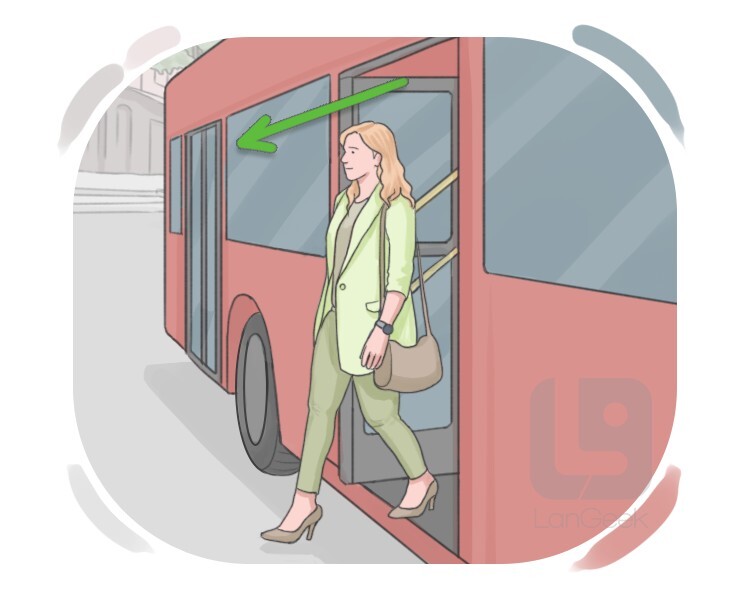
to leave a place, vehicle, etc.
Transitive: to exit a place or vehicle
文法情報
形態的構成
単純語
移動動詞
規則的
現在時制
exit
三人称単数
exits
現在分詞
exiting
単純過去
exited
過去分詞
exited
例
After the movie ended, the audience began to exit the theater.
映画が終わった後、観客は劇場から退出し始めました。
02
去る, 逝去する
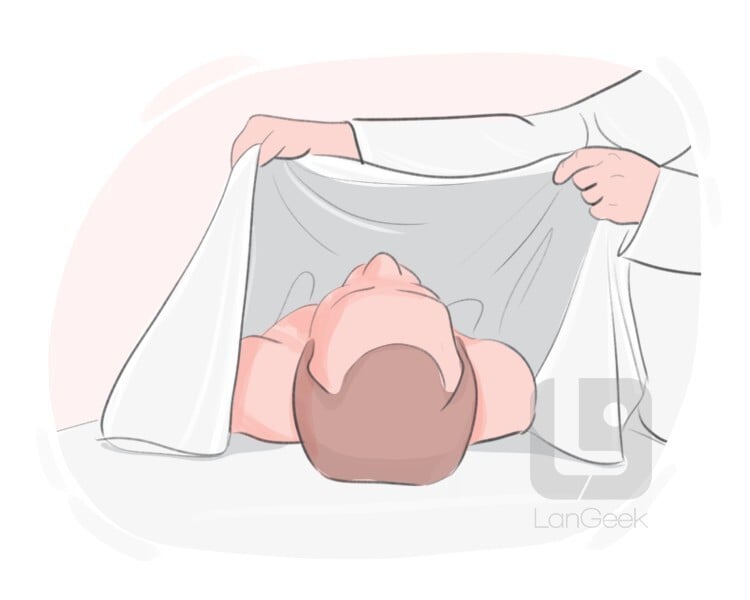
to die or pass away
Intransitive
例
After a long battle with illness, the elderly man peacefully exited surrounded by his loved ones.
長い病気との闘いの後、その高齢の男性は愛する人たちに囲まれながら安らかに逝去しました。
03
撤退する, 優位を失う
to withdraw or fall behind in a competition, race, or contest, losing a previously held advantageous position
Transitive: to exit a position or competition
例
The candidate's controversial statement caused him to quickly exit the lead position in the polls.
候補者の物議を醸す声明により、彼は世論調査の首位から急速に退出した。


