Buscar
Selecciona el idioma del diccionario





























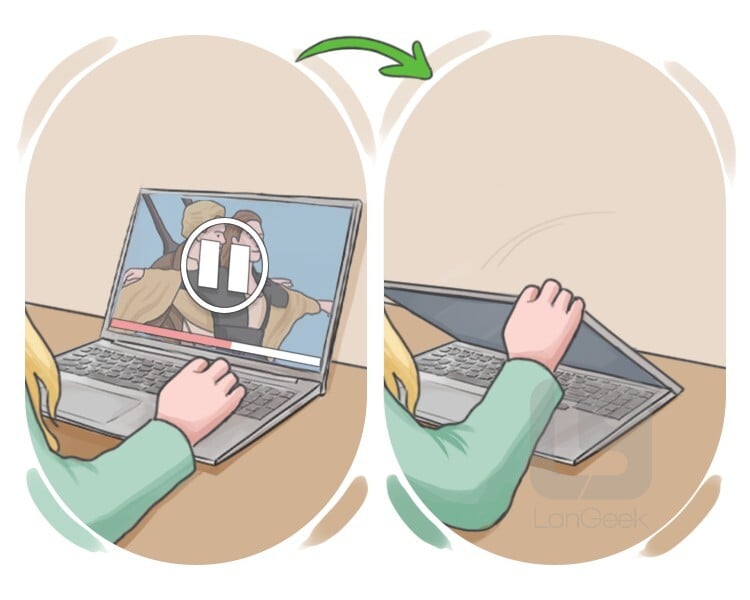
to leave off
01
dejar, terminar
to conclude or cease, often in an abrupt or incomplete manner
Intransitive: to leave off | to leave off with sth
información gramatical
composición morfológica
frasal
verbo de acción
regular
inseparable
partícula
off
verbo base
leave
presente
leave off
3.ª persona singular
leaves off
participio presente
leaving off
pretérito simple
left off
participio pasado
left off
Ejemplos
The story leaves off with the protagonist facing an uncertain future, leaving readers eager for the sequel.
La historia termina con el protagonista enfrentándose a un futuro incierto, dejando a los lectores ansiosos por la secuela.
02
omitir, excluir
to exclude someone or something from a list, consideration, or selection
Transitive: to leave off sb/sth
Ejemplos
The organizers left my name off from the invitation list, causing me to miss the event.
Los organizadores dejaron fuera mi nombre de la lista de invitaciones, lo que me hizo perder el evento.
03
dejar, suspender
to discontinue the use or consumption of something
Transitive: to leave off sue or consumption of something
Ejemplos
The doctor advised me to leave off smoking, as it was detrimental to my health.
El médico me aconsejó dejar de fumar, ya que era perjudicial para mi salud.
04
dejar, parar
to discontinue an activity, either temporarily or permanently
Intransitive
Transitive: to leave off an activity
Ejemplos
Please leave off your incessant chatter and focus on the task at hand.
Por favor, deja de tu charla incesante y concéntrate en la tarea que tienes entre manos.
LanGeek