

Search
Select the dictionary language





























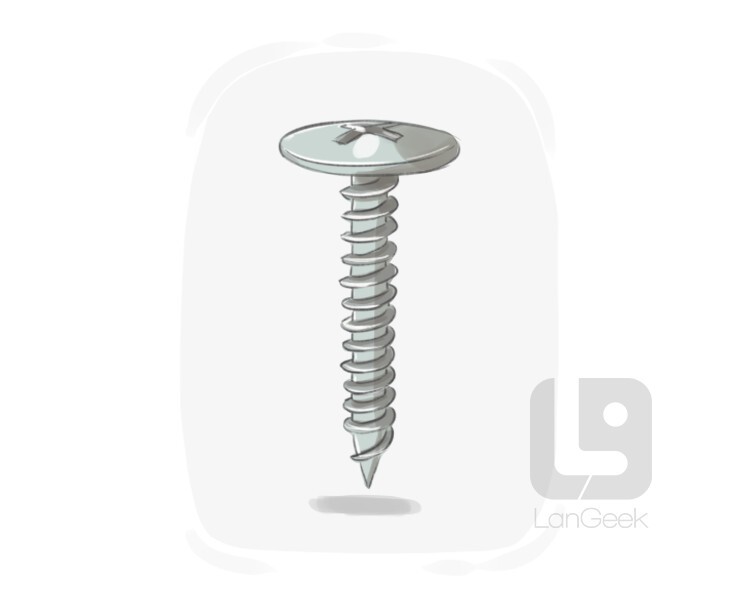
a small pointy piece of metal that can be fastened into wooden or metal objects using a screwdriver to hold things together
an act of sexual intercourse
 American
What is the origin of the term "screw" and how is it used?
"Screw" is an English slang term for sexual intercourse that developed in the late 18th to early 19th centuries, derived from the literal action of turning or driving a screw into something. The metaphor relies on physical motion and penetration, which made it an easy fit for sexual meaning in informal speech. Over time, the sexual sense became widely understood alongside other figurative uses of the word, such as cheating or ruining something. It is commonly used in casual conversation, jokes, insults, and media, often by adults and usually in blunt or irreverent contexts. The term is coarse but relatively mild compared to stronger sexual slang, making it context-dependent rather than strictly obscene.
a propeller with angled blades that rotates to move a ship or aircraft through water or air
a simple machine based on an inclined plane wrapped around a cylinder, converting rotational motion into linear motion
a prison guard
 British
a casual sexual partner
AmericanWhat is the origin of the term "screw" and how is it used?
"Screw" began as a verb in early modern English, referring literally to twisting or fastening, and by the 18th–19th centuries it developed a sexual meaning through metaphor, implying forceful or mechanical motion. From that verb sense, the noun use emerged in the 20th century to refer to a casual sexual partner, framing sex as impersonal or purely physical. It has been used mainly in informal speech, especially among men, and often carries a dismissive or objectifying tone toward the partner being described. The term is context-dependent but usually coarse rather than neutral, and it can sound derogatory when applied directly to a person.
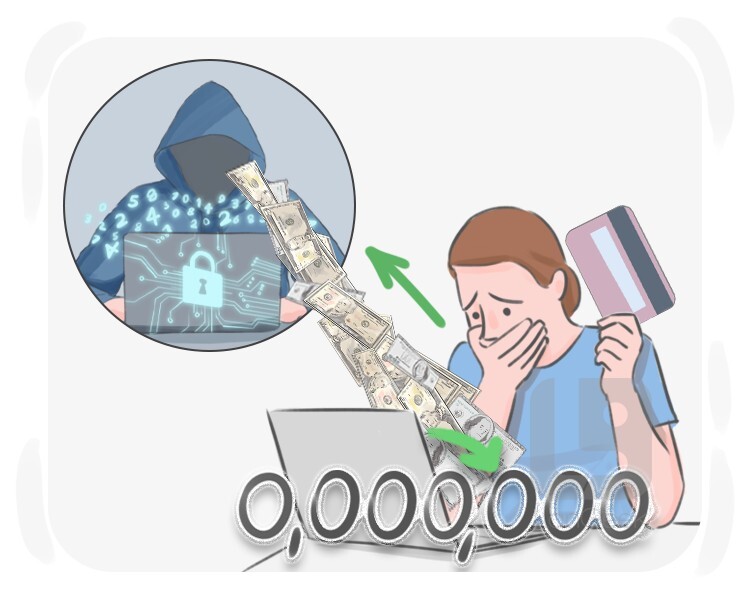
to cheat or take advantage of someone unfairly, often for financial gain
to firmly attach or tighten something using a turning metal fastener
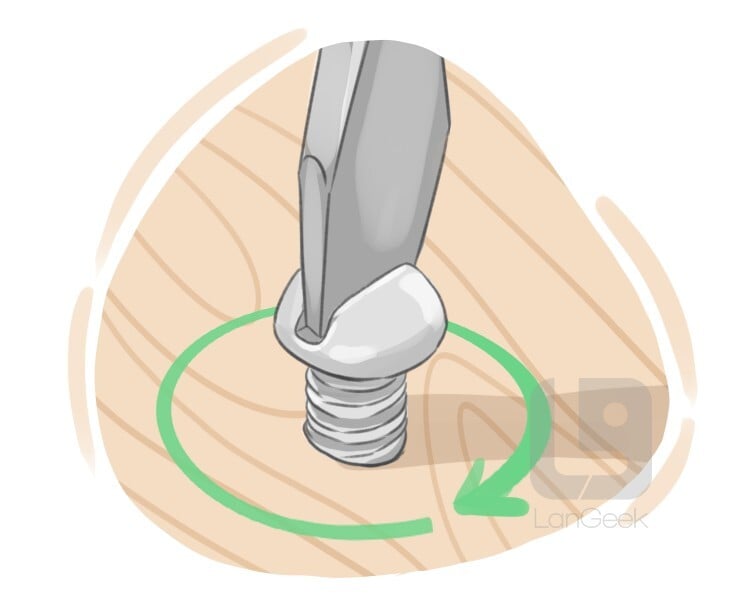
to tighten something by rotating it in a twisting motion
to engage in sexual intercourse
AmericanWhat is the origin of the term "screw" and how is it used?
"Screw" as a verb meaning sexual intercourse dates back to the late 17th to early 18th century, developing from the physical action of twisting or driving a screw, which lent itself to a blunt sexual metaphor. The term gradually shifted from mechanical meaning to sexual slang through bawdy humor and informal speech. By the 19th century, it was widely understood as a coarse synonym for sex. It is commonly used in casual conversation, fiction, and insults, often with an aggressive or irreverent tone. The term is vulgar and informal, context-dependent, and generally inappropriate in polite or formal settings, though less shocking today than stronger sexual verbs.
to express defiance, rejection, or contempt toward a person, rule, or situation
AmericanWhat is the origin of the term "screw" and how is it used?
"Screw" comes from the literal verb meaning to fasten or twist, but by the early–mid 20th century it had developed a slang sense influenced by its use as a milder substitute for "fuck." In this figurative use, it expresses rejection or defiance, as if dismissing a person, rule, or situation outright. Phrases like "screw you," "screw this," or "screw the rules" became common in informal speech, films, and writing. The term is context-dependent: it is coarse but relatively mild compared to stronger profanity, often used casually or emphatically rather than as a severe insult.
LanGeek
Download Our Mobile App

Lexical Tree

