






























to harden
01
硬化, 加固
to increase firmness or solidity of something
Transitive: to harden material
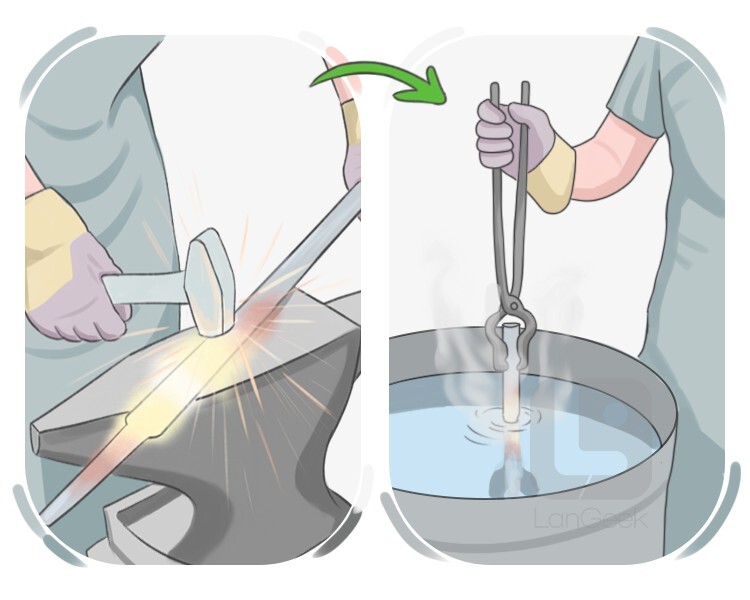
例子
The painter used a fixative to harden the layers of charcoal on the canvas.
画家使用了一种固定剂来硬化画布上的炭层。
02
变硬, 硬化
to increase in firmness or solidity
Intransitive
语法信息
形态构成
派生
动作动词
规则
现在时
harden
第三人称单数
hardens
现在分词
hardening
一般过去时
hardened
过去分词
hardened
例子
The concrete began to harden as it cured, gradually transforming from a liquid state to a solid structure.
混凝土在固化过程中开始变硬,逐渐从液态转变为固态结构。
03
使变硬, 使习惯
to make accustomed or less sensitive to unfavorable conditions
Transitive: to harden sb/sth | to harden sb/sth to unfavorable conditions
例子
Exposure to extreme temperatures can harden plants, enabling them to thrive in arid or cold climates.
暴露于极端温度可以使植物变硬,使它们能够在干旱或寒冷的气候中茁壮成长。
04
使硬化, 使麻木不仁
to make someone's attitude or feelings less sympathetic
Transitive: to harden sb/sth
例子
Continuous exposure to violence in the media can harden individuals to the suffering of others.
媒体中持续接触暴力可能会使个人对他人的痛苦麻木不仁。
LanGeek
下载我们的移动应用

词汇树
hardened
hardening
harden

