






























to transport
01
수송하다
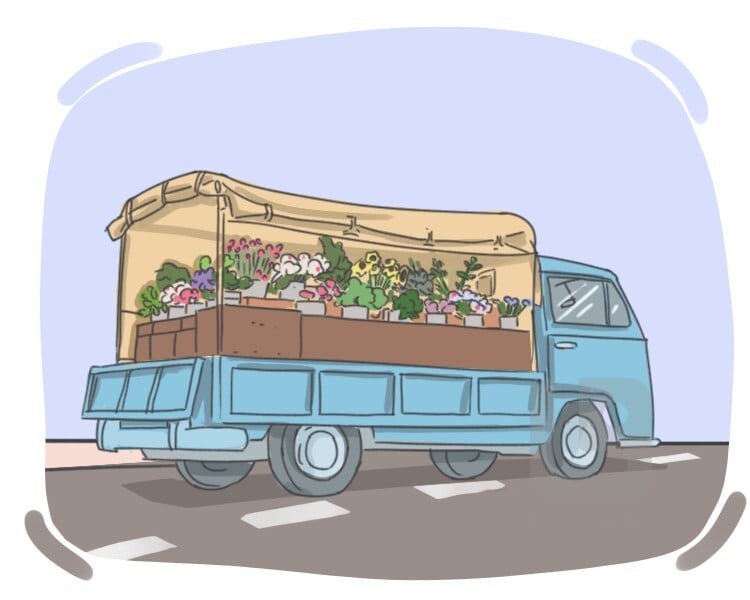
to take people, goods, etc. from one place to another using a vehicle, ship, or aircraft
Transitive: to transport sb/sth | to transport sb/sth somewhere
문법 정보
형태적 구성
단순어
이동 동사
규칙
현재 시제
transport
3인칭 단수
transports
현재분사
transporting
단순 과거
transported
과거분사
transported
예시들
Every morning, the school bus transports students from their neighborhoods to the school campus.
매일 아침, 스쿨버스는 학생들을 그들의 동네에서 학교 캠퍼스로 운송합니다.
1.1
운반하다, 이동시키다
to move something from one place to another by a natural force or process
예시들
The plant was transferring water through its stem.
식물은 줄기를 통해 물을 운반하고 있었습니다.
02
운반하다, 감동시키다
to evoke or fill someone with a strong emotion
Transitive: to transport sb
예시들
As the final notes of the symphony echoed through the concert hall, the music had the power to transport the audience.
교향곡의 마지막 음이 콘서트 홀에 울려 퍼질 때, 음악은 관객을 감동시킬 힘을 가지고 있었다.
Transport
01
교통
a system or method for carrying people or goods from a place to another by trains, cars, etc.
Dialect British
British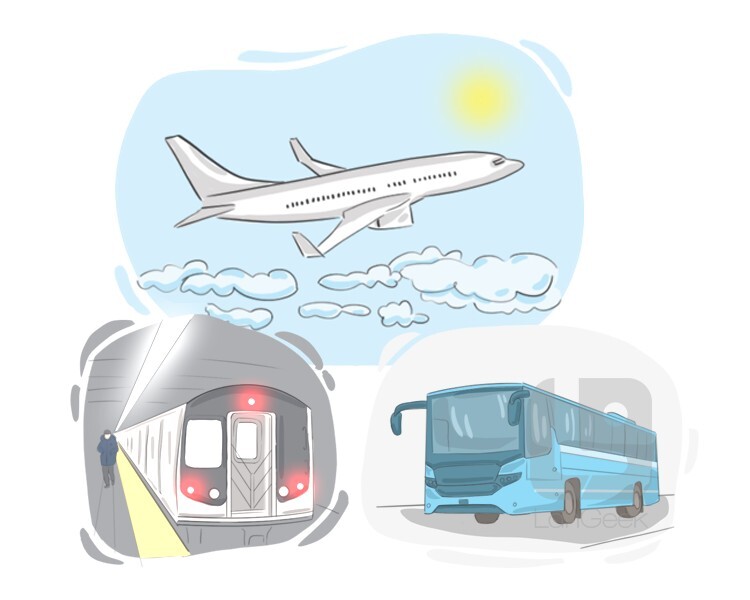
문법 정보
유생성 상태
무생물
형태적 구성
단순어
불가산
singular
not gender specific
예시들
The city's transport system includes buses, trams, and a metro network.
도시의 교통 시스템에는 버스, 트램 및 지하철 네트워크가 포함됩니다.
02
수송
the commercial enterprise of moving goods and materials
03
수송, 전달
an exchange of molecules (and their kinetic energy and momentum) across the boundary between adjacent layers of a fluid or across cell membranes
04
수송, 교통
the act or business of carrying people or goods or being carried from one place to another using different means
05
전송 메커니즘, 전송기
a mechanism that transports magnetic tape across the read/write heads of a tape playback/recorder
06
수송, 황홀경
a state of being carried away by overwhelming emotion
LanGeek
모바일 앱 다운로드

어휘 나무
transporter
transport

