






























to dust
01
ほこりを払う, ほこりを取る
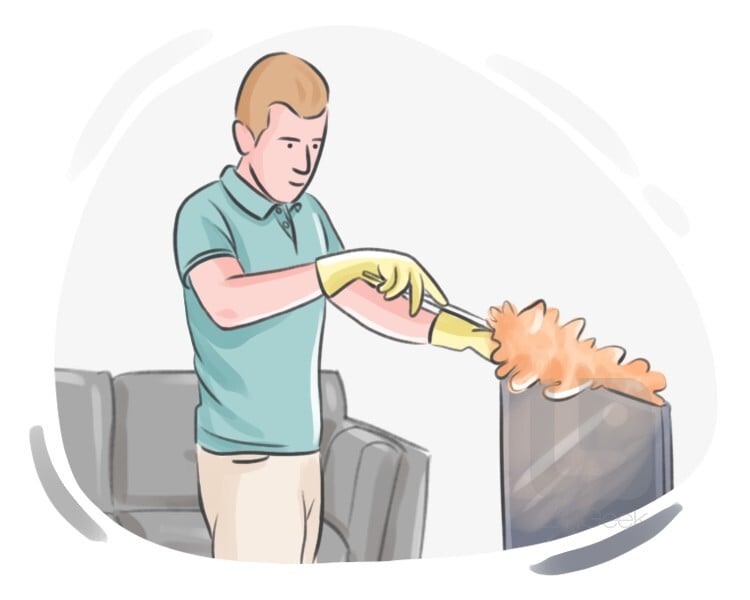
to use a soft cloth or tool to clean and remove particles from the surface of objects, like furniture
Transitive: to dust a surface
文法情報
形態的構成
単純語
動作動詞
規則的
現在時制
dust
三人称単数
dusts
現在分詞
dusting
単純過去
dusted
過去分詞
dusted
例
She regularly dusts the bookshelves to keep them free of accumulated dust.
彼女は本棚にたまったほこりを取り除くため、定期的にほこりを払います。
02
粉をまく, ほこりをかける
to rub or sprinkle a fine, dry powder over a surface to obscure or soften the outlines of a shape, often to create a specific effect or reveal hidden details
Transitive: to dust sth
例
The artist dusted the canvas with charcoal to create a shadowy effect.
アーティストは影の効果を作り出すためにキャンバスに木炭をまぶした。
03
まき散らす, 粉をかける
to loosely distribute or scatter fine particles or substances over an area or surface
Transitive: to dust an area or surface
例
The wind dusted the fields with sand from the nearby dunes.
風が近くの砂丘からの砂で畑をまぶした。
3.1
振りかける, 粉をふる
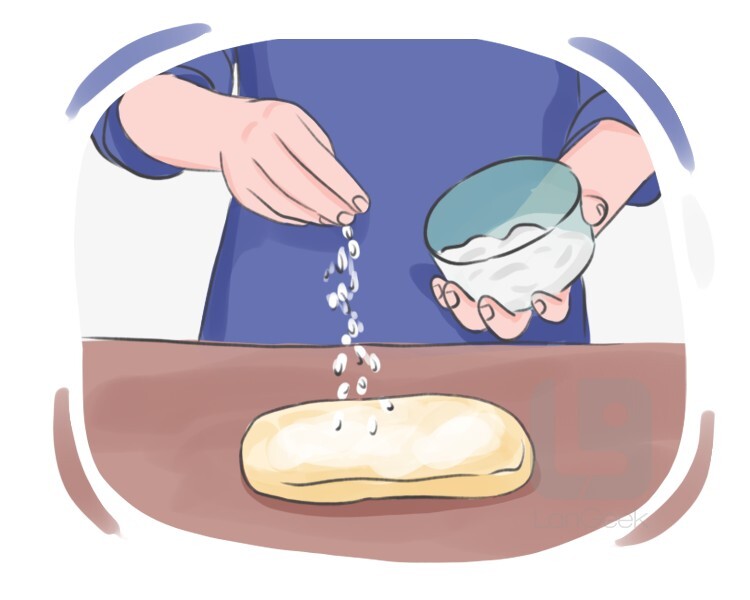
to lightly coat something with a fine substance, often for seasoning or flavoring
Transitive: to dust food with powdered ingredients
例
She dusts the cupcakes with cocoa powder to give them an elegant finish.
彼女はエレガントな仕上げにするためにカップケーキにココアパウダーを振りかけます。
04
トラブルに巻き込まれる, 自分で問題を引き起こす
to be in trouble, especially due to one's own actions or mistakes
例
He really dusted after missing the deadline for the project.
プロジェクトの期限を逃した後、彼は本当に困ったことになった。
Dust
01
ほこり, 土
the fine, dry particles of matter, such as dirt, earth, or pollen, that can be easily carried by the wind
文法情報
有生性の状態
無生物
形態的構成
単純語
不可算
singular
not gender specific
例
The old bookshelf was covered in a thick layer of dust.
古い本棚は厚いほこりの層で覆われていた。
02
ほこり, 灰
the fine particles that remain after something has been destroyed, broken up, or has decayed
例
The demolition crew reduced the old warehouse to dust.
解体作業員は古い倉庫を塵に変えた。
03
ほこり, 塵の粒子
free microscopic particles of solid material
LanGeek
モバイルアプリをダウンロード

語彙ツリー
duster
dust

