spur
spur
spɜr
spēr
British pronunciation
/spˈɜː/

Définition et signification de « spur » en anglais

Spur
01

éperon, ergot
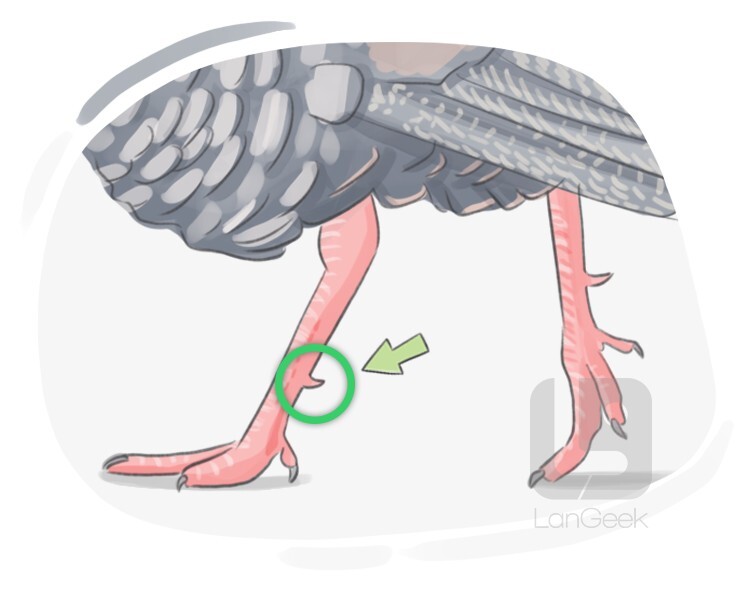
a pointed extension of bone that grows from the leg or foot and is used for defense, mating rituals, or establishing dominance within a social group
spur definition and meaning
02

aiguillon, stimulant

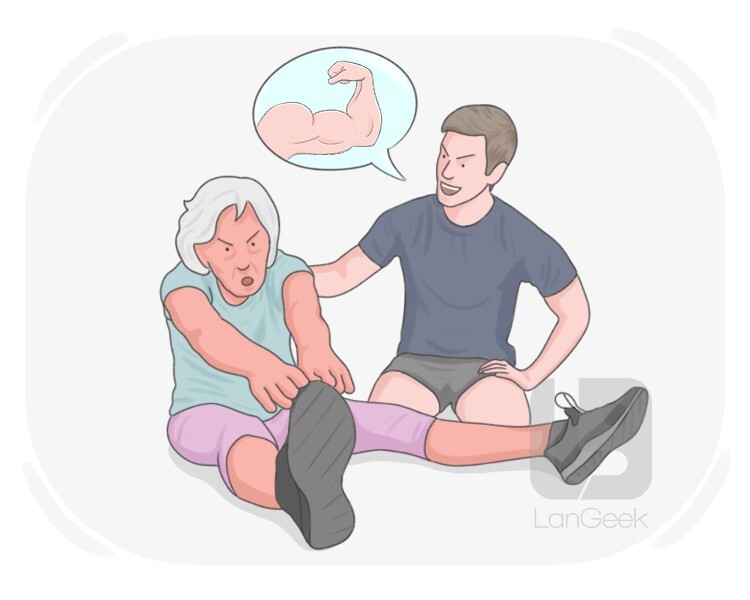
a verbalization that encourages you to attempt something
03

éperon, aiguillon

a small metal tool worn on the rider's heel that is used to give subtle commands to a horse
example
Exemples
The spur's gentle pressure reminded the horse to maintain a steady pace.
La pression douce de l'éperon rappelait au cheval de maintenir un rythme régulier.
Every equestrian must use spurs with care and skill to avoid discomfort for the horse.
Chaque cavalier doit utiliser des éperons avec soin et compétence pour éviter tout inconfort au cheval.
04

embranchement, voie de raccordement

a short railway track branching off from a main line, typically leading to a specific facility
example
Exemples
The spur led directly to the factory for easy shipment of goods.
Le embranchement menait directement à l'usine pour un expédition facile des marchandises.
He followed the spur to reach the warehouse.
Il a suivi la voie de garage pour atteindre l'entrepôt.
05

éperon, prolongement tubulaire à la base de la corolle

tubular extension at the base of the corolla in some flowers
06

éperon, pointe

any sharply pointed projection
to spur
01

inciter, stimuler

to give someone encouragement or motivation
Ditransitive: to spur sb to do sth
to spur definition and meaning
example
Exemples
The coach 's inspiring words were meant to spur the team to give their best effort.
Les mots inspirants de l'entraîneur étaient destinés à stimuler l'équipe à donner le meilleur effort.
Recognition for hard work can spur employees to continue putting in their best.
La reconnaissance pour le travail acharné peut stimuler les employés à continuer à donner le meilleur d'eux-mêmes.
02

encourager, stimuler

to encourage or stimulate an action
Transitive: to spur an action or interest
example
Exemples
The exciting discovery spurred further research in the field of science.
La découverte excitante a stimulé des recherches supplémentaires dans le domaine de la science.
The new policy was designed to spur innovation in the tech industry.
03

éperonner, stimuler

to urge a horse forward by pressing spurs into its sides
Transitive: to spur a horse
example
Exemples
She spurred the horse with gentle pressure to encourage it to jump the obstacle.
Elle éperonna le cheval avec une pression douce pour l'encourager à sauter l'obstacle.
The cowboy spurred his horse to catch up with the herd.
Le cowboy éperonna son cheval pour rattraper le troupeau.
04

éperonner, munir d'éperons

to attach spurs to a horse rider's boots in preparation for riding
Transitive: to spur shoes
example
Exemples
The cowboy spurred his boots before heading out to round up the cattle.
Le cowboy éperonna ses bottes avant de partir rassembler le bétail.
She spurred her shoes with custom-made spurs for the horse competition.
Elle a éperonné ses chaussures avec des éperons sur mesure pour la compétition équestre.
LanGeek
Télécharger l'Application
langeek application

Download Mobile App

stars

app store