

Hledat





























Blister
01
puchýř, blistr
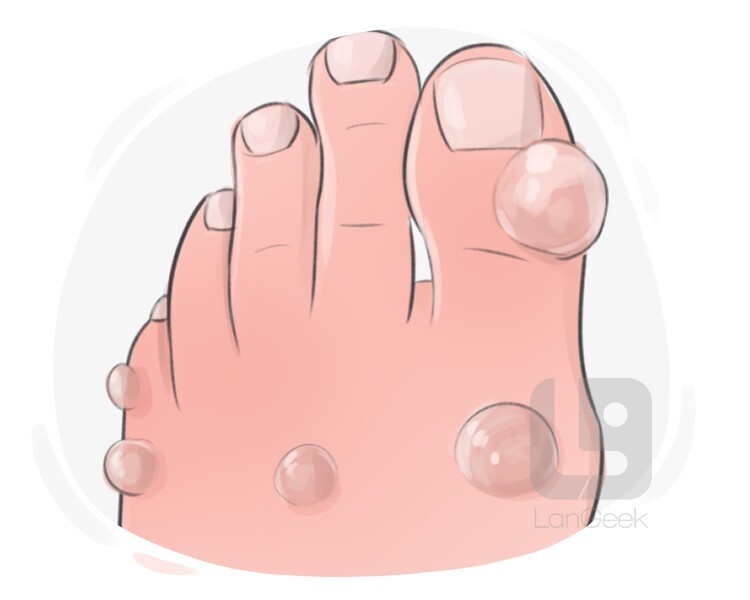
a swollen area on the skin filled with liquid, caused by constant rubbing or by burning
gramatické informace
stav životnosti
neživotný
morfologické složení
jednoduché
počitatelné
singular
not gender specific
tvar množného čísla
blisters
Příklady
A blister is a small pocket of fluid that forms on the skin, typically caused by friction, burns, or other injuries.
Puchýř je malý váček s tekutinou, který se tvoří na kůži, obvykle způsobený třením, popáleninami nebo jinými poraněními.
02
rostlinný puchýř, rostlinná vezikula
a swelling on a plant resembling the raised, fluid-filled bumps seen on skin
Příklady
Blisters appeared on the leaves after insect damage.
Po poškození hmyzem se na listech objevily puchýře.
03
puchýř, bublina
a bubble on a surface caused when a coating or applied substance fails to adhere properly
Příklady
Paint blisters formed on the wall after exposure to moisture.
Po vystavení vlhkosti se na zdi vytvořily puchýře barvy.
to blister
01
puchýřovat, tvořit puchýře
to develop small, raised pockets of skin filled with fluid, usually from friction, heat, or irritation
gramatické informace
morfologické složení
jednoduché
dějové sloveso
pravidelné
přítomný čas
blister
3. osoba jednotného čísla
blisters
příčestí přítomné
blistering
minulý čas prostý
blistered
příčestí minulé
blistered
Příklady
His hands began to blister after hours of rowing.
Jeho ruce začaly tvořit puchýře po hodinách veslování.
02
způsobit puchýře, vytvářet puchýřky
to cause painful, raised, fluid-filled sores on the skin
Příklady
The chemical can blister the skin if touched without gloves.
Chemikálie může způsobit puchýře na kůži, pokud se jí dotknete bez rukavic.
03
přísně pokárat, ostře kritizovat
to subject someone or something to severe criticism or harsh verbal attack
Příklady
The coach blistered the team after their poor performance.
Trenér ostře zkritizoval tým po jejich špatném výkonu.
LanGeek
Stáhněte si naši mobilní aplikaci

Lexikální Strom
blistery
blister

