






























Blister
文法情報
有生性の状態
無生物
形態的構成
単純語
可算
singular
not gender specific
複数形
blisters
例
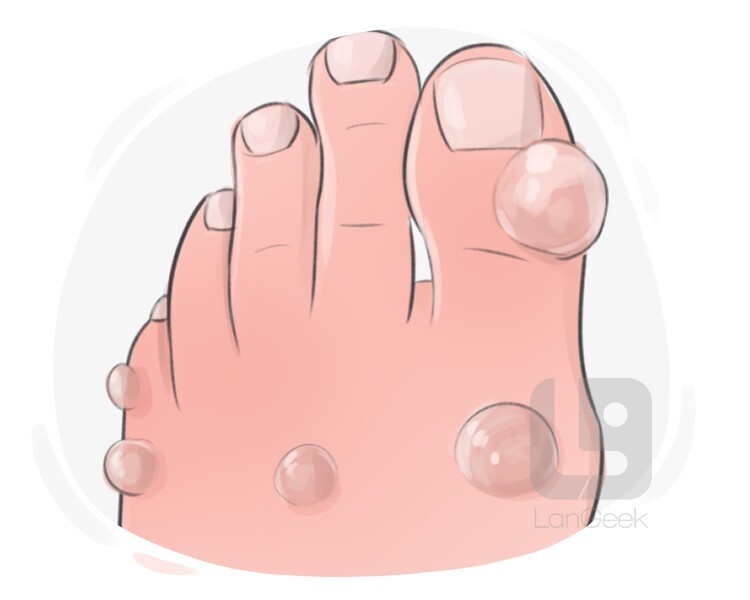
A blister is a small pocket of fluid that forms on the skin, typically caused by friction, burns, or other injuries.
水ぶくれは、皮膚に形成される小さな液体の袋で、通常は摩擦、火傷、または他の怪我によって引き起こされます。
02
植物の水疱, 植物の水ぶくれ
a swelling on a plant resembling the raised, fluid-filled bumps seen on skin
例
Blisters appeared on the leaves after insect damage.
昆虫による被害の後、葉に水疱が現れました。
03
水ぶくれ, 膨れ
a bubble on a surface caused when a coating or applied substance fails to adhere properly
例
Paint blisters formed on the wall after exposure to moisture.
湿気にさらされた後、壁に塗料の水ぶくれができた。
to blister
01
水ぶくれができる, 水疱ができる
to develop small, raised pockets of skin filled with fluid, usually from friction, heat, or irritation
文法情報
形態的構成
単純語
動作動詞
規則的
現在時制
blister
三人称単数
blisters
現在分詞
blistering
単純過去
blistered
過去分詞
blistered
例
His hands began to blister after hours of rowing.
何時間も漕いだ後、彼の手は水ぶくれができ始めた。
02
水疱を生じさせる, 水ぶくれを起こす
to cause painful, raised, fluid-filled sores on the skin
例
The chemical can blister the skin if touched without gloves.
その化学物質は、手袋なしで触れると皮膚に水ぶくれを引き起こす可能性があります。
03
厳しく叱る, 厳しく批判する
to subject someone or something to severe criticism or harsh verbal attack
例
The coach blistered the team after their poor performance.
コーチはチームの不振なパフォーマンスの後、彼らを厳しく批判した。
LanGeek
モバイルアプリをダウンロード

語彙ツリー
blistery
blister

