
blister
blis
ˈblɪs
blis
ter
tər
tēr
British pronunciation
/ˈblɪstə/

Définition et signification de « blister » en anglais

Blister
01

ampoule, cloque
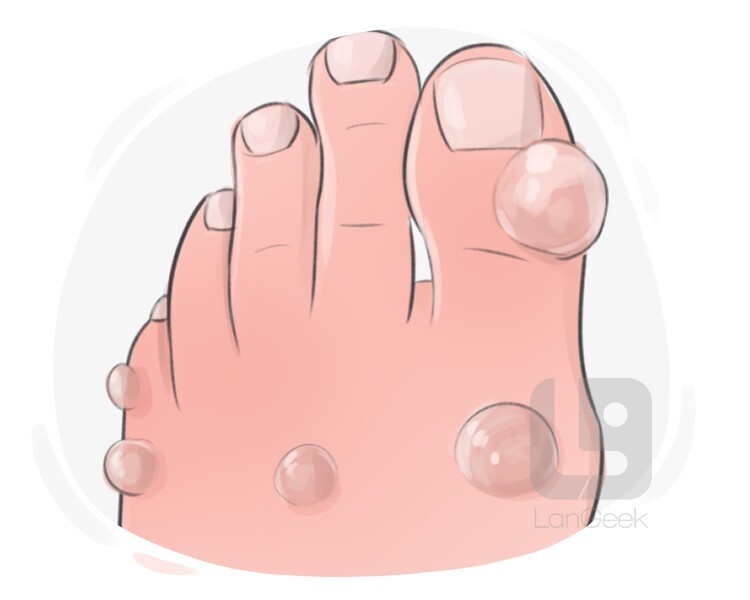
a swollen area on the skin filled with liquid, caused by constant rubbing or by burning
Wiki
blister definition and meaning
example
Exemples
A blister is a small pocket of fluid that forms on the skin, typically caused by friction, burns, or other injuries.
Une ampoule est une petite poche de liquide qui se forme sur la peau, généralement causée par des frottements, des brûlures ou d'autres blessures.
Blisters can vary in size and are often filled with clear fluid, though they can also contain blood or pus if infected.
Les ampoules peuvent varier en taille et sont souvent remplies de liquide clair, bien qu'elles puissent aussi contenir du sang ou du pus si elles sont infectées.
02

a swelling on a plant resembling the raised, fluid-filled bumps seen on skin

example
Exemples
Blisters appeared on the leaves after insect damage.
The gardener noticed small blisters on the tomato plant.
03

a bubble on a surface caused when a coating or applied substance fails to adhere properly

example
Exemples
Paint blisters formed on the wall after exposure to moisture.
The varnish on the table had blisters from excessive heat.
to blister
01

to develop small, raised pockets of skin filled with fluid, usually from friction, heat, or irritation

example
Exemples
His hands began to blister after hours of rowing.
Wearing tight shoes caused her feet to blister.
02

to cause painful, raised, fluid-filled sores on the skin

example
Exemples
The chemical can blister the skin if touched without gloves.
Hot steam blistered the worker's forearms.
03

to subject someone or something to severe criticism or harsh verbal attack

example
Exemples
The coach blistered the team after their poor performance.
Critics blistered the movie for its weak plot.
LanGeek
Télécharger l'Application
langeek application

Download Mobile App

stars

app store


























