

অনুসন্ধান করুন
অভিধানের ভাষা নির্বাচন করুন





























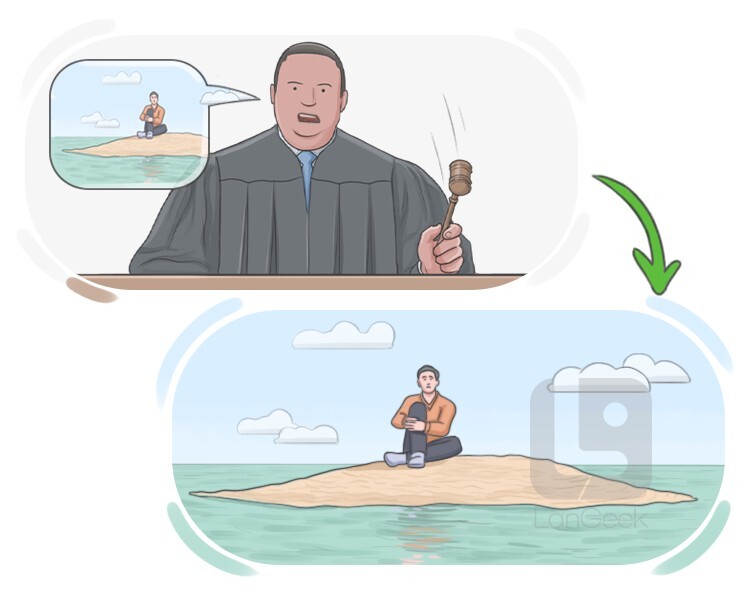
to exile
01
নির্বাসিত করা, বিতাড়িত করা
to force someone to live away from their native country, usually due to political reasons or as a punishment
Transitive: to exile sb
ব্যাকরণগত তথ্য
রূপগত গঠন
সরল
কর্মসূচক ক্রিয়া
নিয়মিত
বর্তমান কাল
exile
৩য় পুরুষ একবচন
exiles
বর্তমান কৃদন্ত
exiling
সরল অতীত
exiled
অতীত কৃদন্ত
exiled
উদাহরণ
The political dissident was exiled from the country for speaking out against the government.
রাজনৈতিক ভিন্নমতাবলম্বী সরকারের বিরুদ্ধে কথা বলার জন্য দেশ থেকে নির্বাসিত হয়েছিলেন।
Exile
ব্যাকরণগত তথ্য
প্রাণবাচকতার অবস্থা
বিমূর্ত
রূপগত গঠন
যৌগিক
অগণনীয়
singular
not gender specific
উদাহরণ
The political dissident lived in exile for over a decade, seeking asylum in neighboring countries.
রাজনৈতিক ভিন্নমতাবলম্বী এক দশকেরও বেশি সময় ধরে নির্বাসনে বসবাস করেছিলেন, প্রতিবেশী দেশগুলিতে আশ্রয় চেয়েছিলেন।
02
নির্বাসিত, বিতাড়িত
a person who has been forced to leave their home or country
উদাহরণ
The exile wrote memoirs about life abroad.
নির্বাসিত বিদেশে জীবন সম্পর্কে স্মৃতিকথা লিখেছেন।
03
নির্বাসিত, প্রবাসী
a person who is voluntarily living away from their home or country
উদাহরণ
Writers sometimes live in exile to find inspiration.
লেখকরা কখনও কখনও অনুপ্রেরণা খুঁজে পেতে নির্বাসনে বাস করেন।
LanGeek


