






























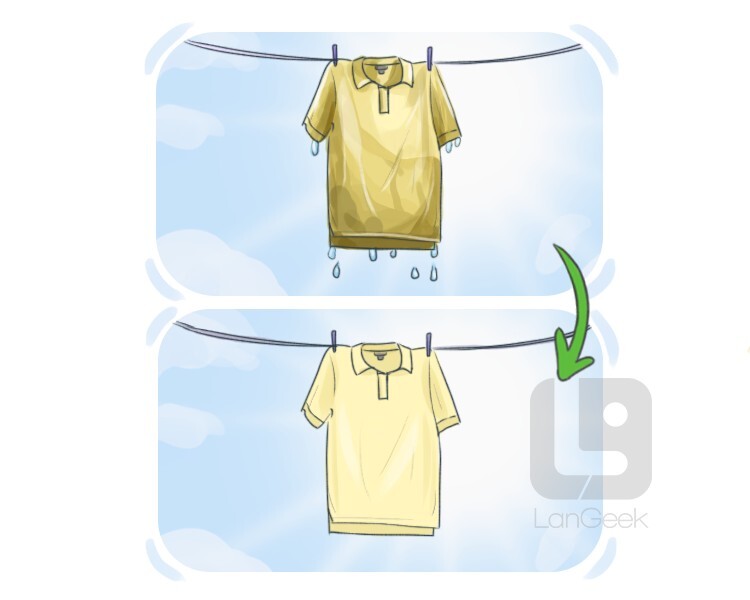
to dehydrate
01
탈수시키다, 말리다
to remove water from a substance, often causing it to become dry
Transitive: to dehydrate sth
문법 정보
형태적 구성
파생어
동작 동사
규칙
현재 시제
dehydrate
3인칭 단수
dehydrates
현재분사
dehydrating
단순 과거
dehydrated
과거분사
dehydrated
예시들
The air conditioning system was unintentionally dehydrating the indoor air.
에어컨 시스템이 실수로 실내 공기를 탈수시키고 있었습니다.
02
탈수시키다, 말리다
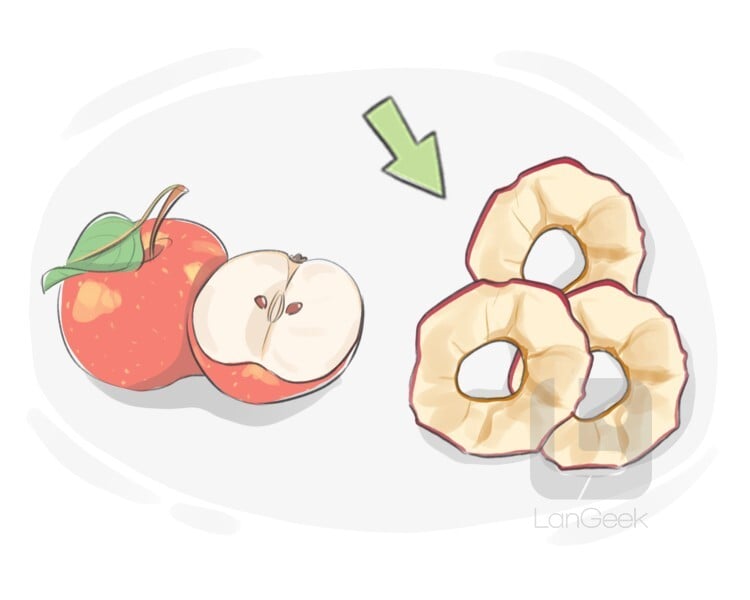
to remove moisture from something, such as food, to preserve it for longer storage
Transitive: to dehydrate food
예시들
We dehydrate apple slices every summer for crunchy snacks during hikes.
우리는 하이킹 동안 바삭한 간식을 위해 매년 여름 사과 조각을 탈수합니다.
03
탈수하다, 탈수되다
to lose a large amount of fluid through urinating, vomiting, or intense physical activity
Intransitive
예시들
After running a marathon in the hot sun without adequate hydration, he began to dehydrate.
충분한 수분 보충 없이 뜨거운 태양 아래에서 마라톤을 뛴 후, 그는 탈수되기 시작했다.
04
탈수하다, 물 분자를 잃다
(chemistry) to lose water molecules during a chemical reaction
Intransitive
예시들
When heated, copper(II) sulfate pentahydrate undergoes a chemical reaction to dehydrate.
가열하면 황산구리(II) 오수화물은 탈수하기 위해 화학 반응을 겪습니다.
LanGeek
모바일 앱 다운로드

어휘 나무
dehydrate
hydrate

