






























Source
01
출처, 기원
a document, organization, or entity from which information is obtained
예시들
The report was compiled using multiple sources.
그 보고서는 여러 출처를 사용하여 편집되었습니다.
02
출처, 정보 제공자
an individual who provides information

예시들
Her source provided valuable insights into the company's financial status.
그녀의 소스는 회사의 재정 상태에 대한 귀중한 통찰력을 제공했습니다.
03
원천, 기원
a place or thing from which something originates or begins
문법 정보
유생성 상태
무생물
형태적 구성
단순어
가산
singular
not gender specific
복수형
sources
예시들
The river's source is high in the mountains.
강의 원천은 산 높은 곳에 있다.
04
원천, 영감
anything that inspires or stimulates the creation of new work or ideas
예시들
Nature has been a source of inspiration for artists.
자연은 예술가들에게 영감의 원천이 되어 왔습니다.
05
원천, 기원
a facility, location, or establishment where something can be obtained
예시들
The factory is a source of raw materials.
그 공장은 원자재의 공급원입니다.
06
원천, 기원
someone who initiates, creates, or causes something
예시들
She is the source of the idea.
그녀는 그 아이디어의 근원입니다.
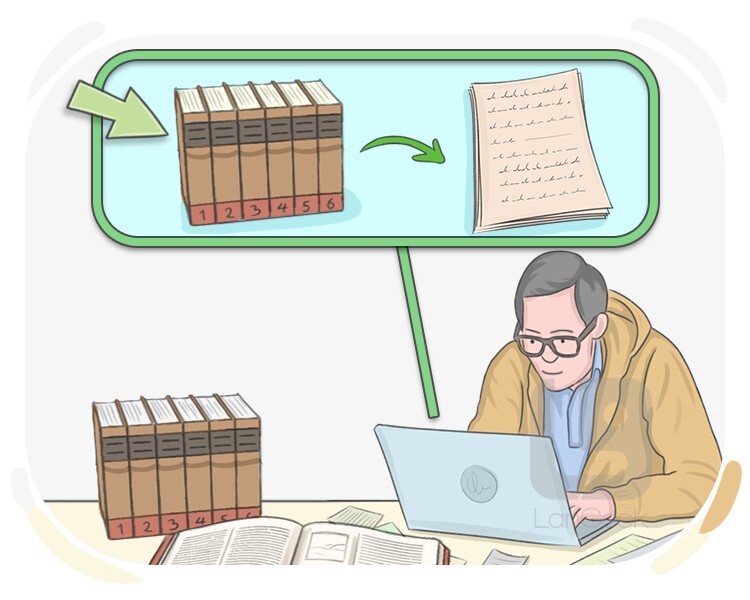
07
출처, 참고 문헌
a book or a document that supplies information in a research and is referred to
예시들
The historian cited an ancient manuscript as her primary source.
역사학자는 그녀의 주요 출처로 고대 원고를 인용했다.
08
원천, 숙주
a living or non-living host in which an infectious agent normally exists and multiplies
예시들
Bats are considered a natural source of some viruses.
박쥐는 일부 바이러스의 자연적인 원천으로 간주된다.
09
소스, 기원
(technology) the origin or starting point of data, energy, or a process
예시들
The data source must be reliable for accurate results.
정확한 결과를 위해서는 데이터 소스가 신뢰할 수 있어야 합니다.
10
원천, 시작점
the entity in a sentence or construction that represents the origin, starting point, or point of departure of an action, movement, or transfer
예시들
In the sentence "She sent a letter to her friend," she is the source of the action.
문장 "그녀가 친구에게 편지를 보냈다"에서, 원천은 행동의 실체입니다.
11
원천, 발원지
the place where a river or stream begins
예시들
We visited the source of the river.
우리는 강의 원천을 방문했습니다.
to source
01
출처를 밝히다, 소스를 확인하다
to identify or specify the origin of something, such as information, materials, or products
문법 정보
형태적 구성
파생어
동작 동사
규칙
현재 시제
source
3인칭 단수
sources
현재분사
sourcing
단순 과거
sourced
과거분사
sourced
예시들
The journalist carefully sourced her information.
그 기자는 자신의 정보를 신중하게 소싱했습니다.
02
조달하다, 구입하다
to obtain or procure a product, material, or service from a particular supplier, location, or country
예시들
The company sourced raw materials from overseas.
회사는 해외에서 원자재를 조달했다.
LanGeek
모바일 앱 다운로드

어휘 나무
resource
source

