






























Orbit
01
궤도, 운행 궤도
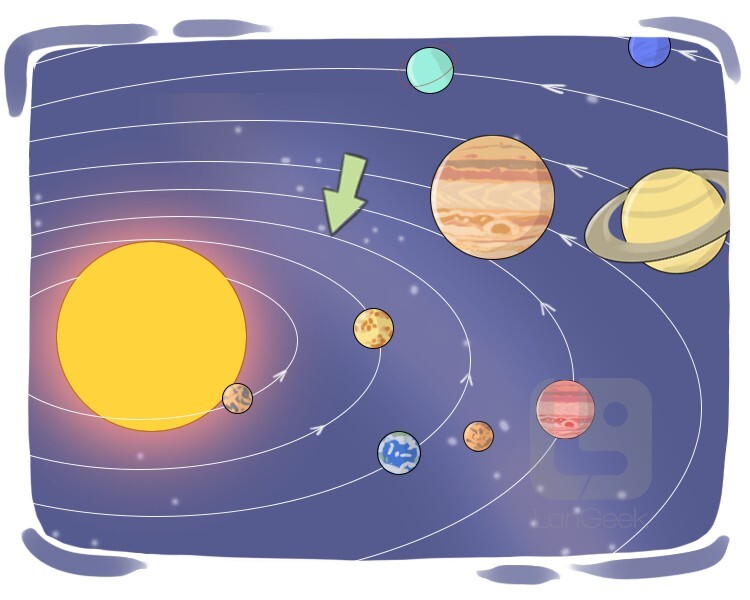
the path an object in the space follows to move around a planet, star, etc.
문법 정보
유생성 상태
무생물
형태적 구성
단순어
가산
singular
not gender specific
복수형
orbits
예시들
The satellite was placed into a stable orbit to continuously monitor weather patterns from space.
위성은 우주에서 기상 패턴을 지속적으로 모니터링하기 위해 안정적인 궤도에 배치되었습니다.
02
영향권, 활동 범위
an area in which something operates, exerts influence, or holds power
예시들
The corporation extended its orbit into international markets.
그 기업은 국제 시장으로 궤도를 확장했다.
03
영역, 궤도
a particular environment, sphere, or walk of life
예시들
She moved in the orbit of the fashion industry.
그녀는 패션 산업의 궤도 안에서 움직였다.
04
안와, 눈구멍
the hollow in the skull that holds and supports the eyeball
예시들
The fracture damaged the orbit around his eye.
골절이 그의 눈 주위의 안와를 손상시켰습니다.
05
궤도, 경로
the path followed by an electron around an atom's nucleus
예시들
The orbit of an electron affects chemical bonding.
전자의 궤도는 화학 결합에 영향을 미칩니다.
to orbit
01
궤도를 돌다, 공전하다
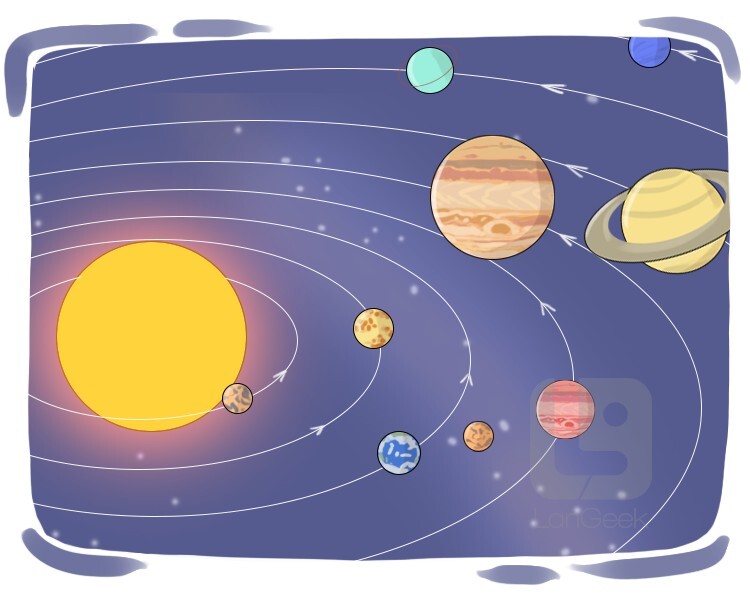
to move around a star, planet, or a large object in space
Transitive: to orbit a planet or star | to orbit around a planet or star
문법 정보
형태적 구성
단순어
이동 동사
규칙
현재 시제
orbit
3인칭 단수
orbits
현재분사
orbiting
단순 과거
orbited
과거분사
orbited
예시들
The moon orbits around the Earth once every 27.3 days.
달은 27.3일마다 지구 주위를 공전합니다.


