

অনুসন্ধান করুন
অভিধানের ভাষা নির্বাচন করুন





























Orbit
01
কক্ষপথ, পথ
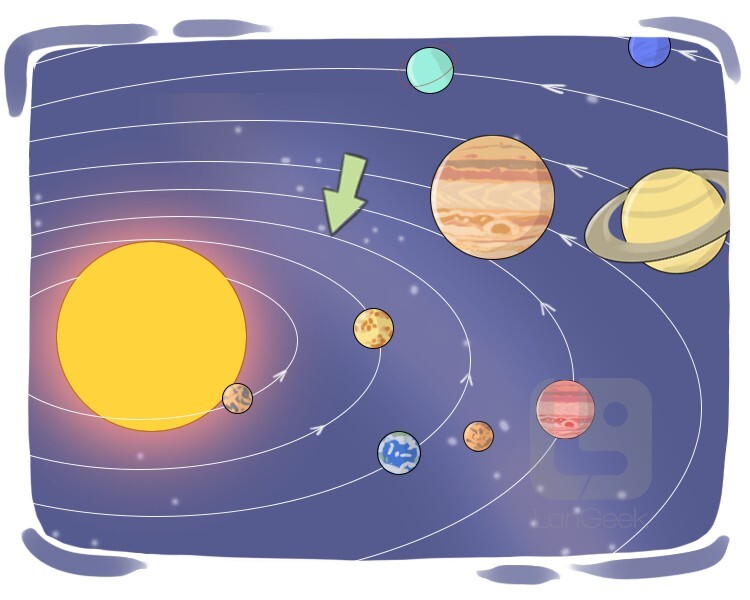
the path an object in the space follows to move around a planet, star, etc.
ব্যাকরণগত তথ্য
প্রাণবাচকতার অবস্থা
জড়
রূপগত গঠন
সরল
গণনীয়
singular
not gender specific
বহুবচন রূপ
orbits
উদাহরণ
The satellite was placed into a stable orbit to continuously monitor weather patterns from space.
উপগ্রহটি স্থির কক্ষপথে স্থাপন করা হয়েছিল মহাকাশ থেকে আবহাওয়ার ধরণগুলি অবিচ্ছিন্নভাবে পর্যবেক্ষণ করার জন্য।
02
প্রভাব বলয়, কার্যক্ষেত্র
an area in which something operates, exerts influence, or holds power
উদাহরণ
The corporation extended its orbit into international markets.
কর্পোরেশনটি আন্তর্জাতিক বাজারে তার কক্ষপথ প্রসারিত করেছে।
03
পরিধি, কক্ষপথ
a particular environment, sphere, or walk of life
উদাহরণ
She moved in the orbit of the fashion industry.
তিনি ফ্যাশন শিল্পের কক্ষপথে চলাফেরা করতেন।
04
চোখের কোটর, কক্ষপথ
the hollow in the skull that holds and supports the eyeball
উদাহরণ
The fracture damaged the orbit around his eye.
ফ্র্যাকচারটি তার চোখের চারপাশের কক্ষপথ ক্ষতিগ্রস্ত করেছে।
05
কক্ষপথ, পথ
the path followed by an electron around an atom's nucleus
উদাহরণ
The orbit of an electron affects chemical bonding.
একটি ইলেকট্রনের কক্ষপথ রাসায়নিক বন্ধনকে প্রভাবিত করে।
to orbit
01
কক্ষপথে ঘোরা, প্রদক্ষিণ করা
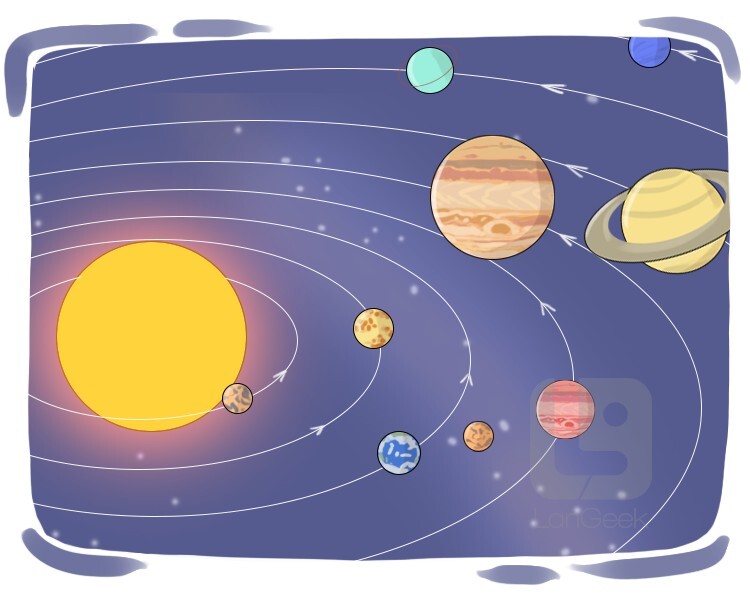
to move around a star, planet, or a large object in space
Transitive: to orbit a planet or star | to orbit around a planet or star
ব্যাকরণগত তথ্য
রূপগত গঠন
সরল
গতিবাচক ক্রিয়া
নিয়মিত
বর্তমান কাল
orbit
৩য় পুরুষ একবচন
orbits
বর্তমান কৃদন্ত
orbiting
সরল অতীত
orbited
অতীত কৃদন্ত
orbited
উদাহরণ
The moon orbits around the Earth once every 27.3 days.
চাঁদ প্রতি 27.3 দিনে পৃথিবীর চারপাশে কক্ষপথ প্রদক্ষিণ করে।


