Rechercher
Sélectionnez la langue du dictionnaire




























orbit
Définition et signification de « orbit » en anglais
Orbit
01
orbite
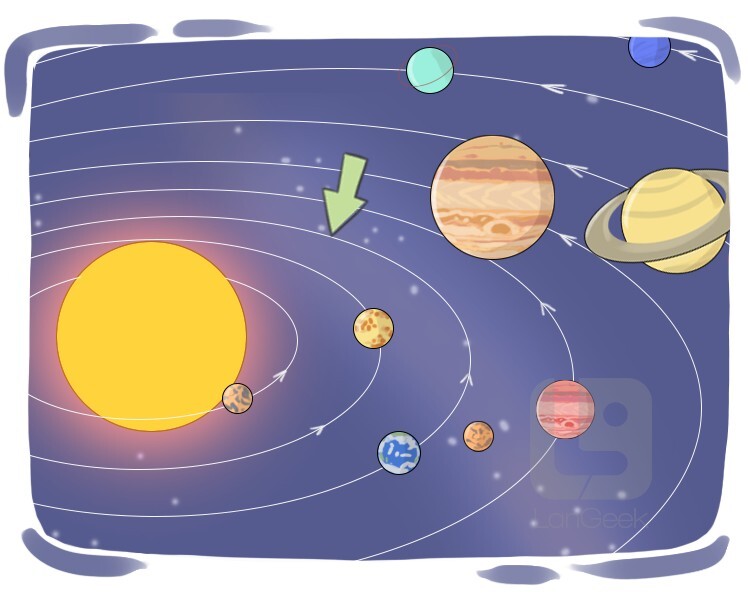
the path an object in the space follows to move around a planet, star, etc.
orbital pathtrajectory
spécialisé
informations grammaticales
statut d’animéité
inanimé
composition morphologique
simple
dénombrable
singular
not gender specific
forme plurielle
orbits
Exemples
The satellite was placed into a stable orbit to continuously monitor weather patterns from space.
Le satellite a été placé sur une orbite stable pour surveiller en continu les conditions météorologiques depuis l'espace.
02
sphère d'influence,champ d'action
an area in which something operates, exerts influence, or holds power
domainreachsphere of influence
figuré
Exemples
The corporation extended its orbit into international markets.
La société a étendu son orbite sur les marchés internationaux.
03
sphère,orbite
a particular environment, sphere, or walk of life
circlemilieusphere
figuré
Exemples
She moved in the orbit of the fashion industry.
Elle évoluait dans l'orbite de l'industrie de la mode.
04
orbite,cavité orbitaire
the hollow in the skull that holds and supports the eyeball
eye socketorbital cavity
spécialisé
Exemples
The fracture damaged the orbit around his eye.
La fracture a endommagé l'orbite autour de son œil.
05
orbite,trajectoire
the path followed by an electron around an atom's nucleus
electron pathelectron shell
spécialisé
Exemples
The orbit of an electron affects chemical bonding.
L'orbite d'un électron affecte la liaison chimique.
orbit
01
"to orbit"orbiter autour de
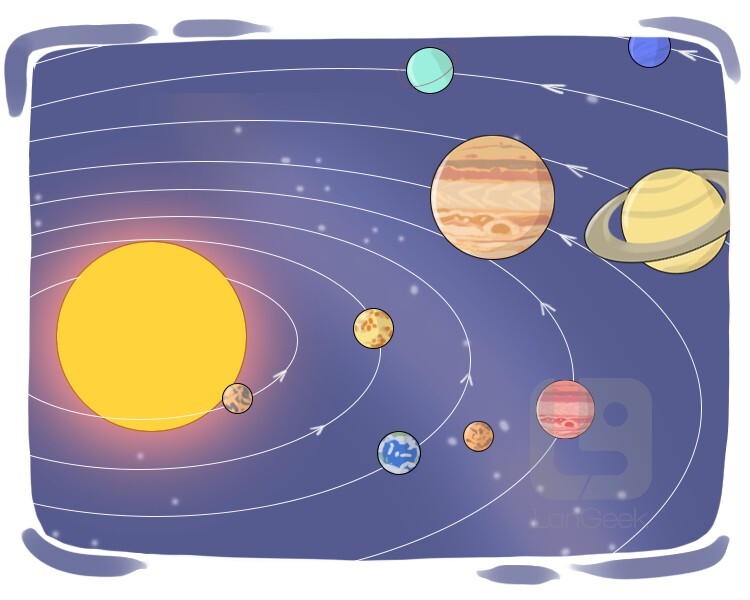
to move around a star, planet, or a large object in space
circlerevolve around
spécialisé
transitive: to orbit a planet or star | to orbit around a planet or star
informations grammaticales
composition morphologique
simple
verbe de mouvement
régulier
Exemples
The moon orbits around the Earth once every 27.3 days.
La lune orbite autour de la Terre une fois tous les 27,3 jours.