

Rechercher
Sélectionnez la langue du dictionnaire





























Orbit
01
orbite
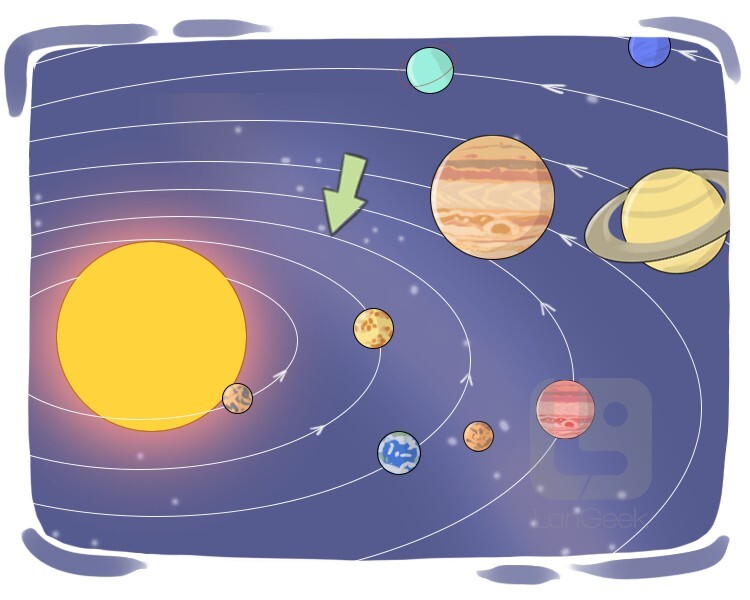
the path an object in the space follows to move around a planet, star, etc.
informations grammaticales
statut d’animéité
inanimé
composition morphologique
simple
dénombrable
singular
not gender specific
forme plurielle
orbits
Exemples
The satellite was placed into a stable orbit to continuously monitor weather patterns from space.
Le satellite a été placé sur une orbite stable pour surveiller en continu les conditions météorologiques depuis l'espace.
02
sphère d'influence, champ d'action
an area in which something operates, exerts influence, or holds power
Exemples
The corporation extended its orbit into international markets.
La société a étendu son orbite sur les marchés internationaux.
03
sphère, orbite
a particular environment, sphere, or walk of life
Exemples
She moved in the orbit of the fashion industry.
Elle évoluait dans l'orbite de l'industrie de la mode.
04
orbite, cavité orbitaire
the hollow in the skull that holds and supports the eyeball
Exemples
The fracture damaged the orbit around his eye.
La fracture a endommagé l'orbite autour de son œil.
05
orbite, trajectoire
the path followed by an electron around an atom's nucleus
Exemples
The orbit of an electron affects chemical bonding.
L'orbite d'un électron affecte la liaison chimique.
to orbit
01
orbiter autour de
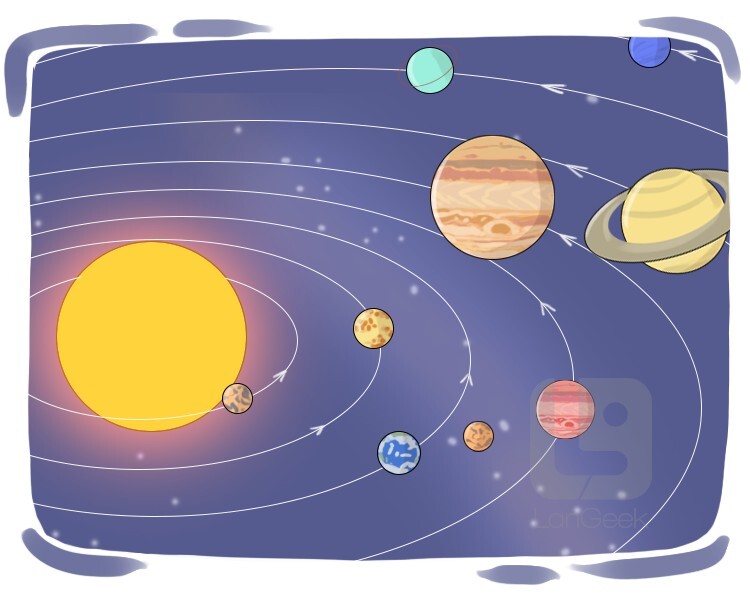
to move around a star, planet, or a large object in space
Transitive: to orbit a planet or star | to orbit around a planet or star
informations grammaticales
composition morphologique
simple
verbe de mouvement
régulier
présent
orbit
3e personne du singulier
orbits
participe présent
orbiting
passé simple
orbited
participe passé
orbited
Exemples
The moon orbits around the Earth once every 27.3 days.
La lune orbite autour de la Terre une fois tous les 27,3 jours.


