Caută
Selectați limba dicționarului



























Orbit
01
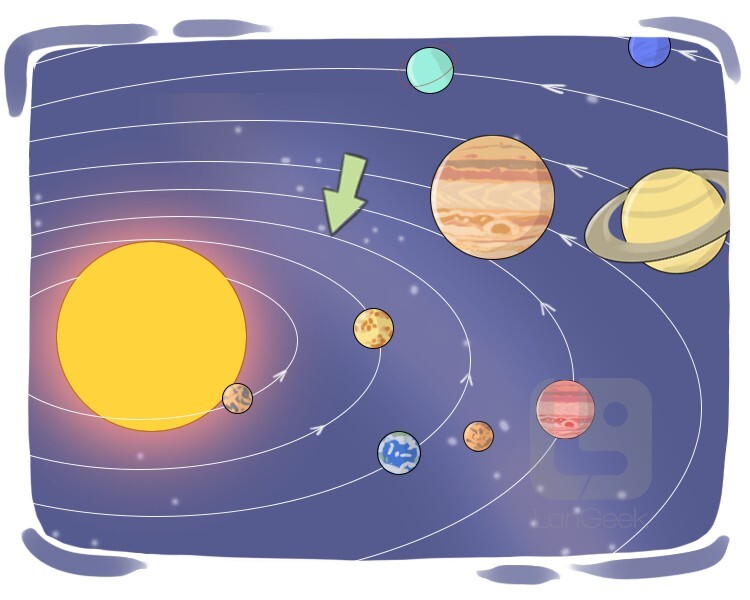
orbită, traiectorie
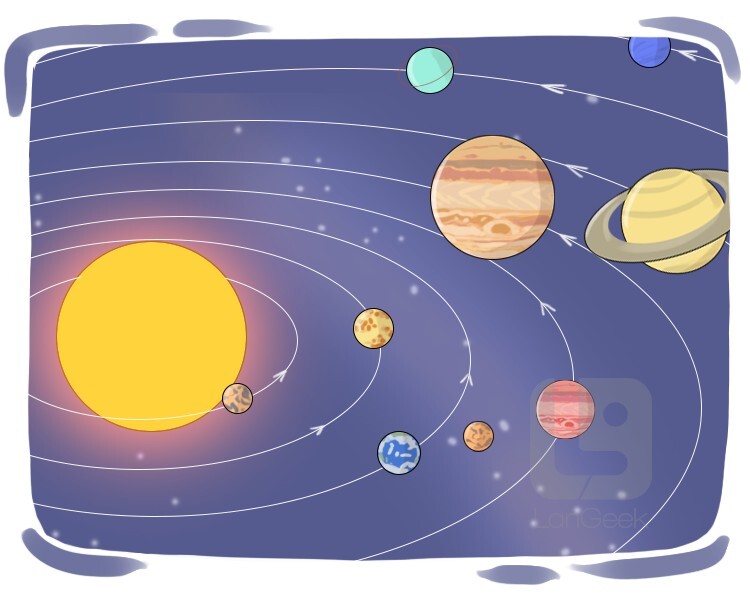
the path an object in the space follows to move around a planet, star, etc.
informații gramaticale
statut de animatitate
inanimat
compoziție morfologică
simplu
numărabil
singular
not gender specific
formă de plural
orbits
Exemple
The satellite was placed into a stable orbit to continuously monitor weather patterns from space.
Satelitul a fost plasat pe o orbită stabilă pentru a monitoriza continuu modelele meteorologice din spațiu.
02
sferă de influență, sferă de acțiune
an area in which something operates, exerts influence, or holds power
Exemple
The corporation extended its orbit into international markets.
Corporația și-a extins orbita pe piețele internaționale.
03
sferă, orbită
a particular environment, sphere, or walk of life
Exemple
She moved in the orbit of the fashion industry.
Ea se mișca în orbita industriei modei.
04
orbita, cavitatea ochiului
the hollow in the skull that holds and supports the eyeball
Exemple
The fracture damaged the orbit around his eye.
Fractura a deteriorat orbita din jurul ochiului său.
05
orbită, traiectorie
the path followed by an electron around an atom's nucleus
Exemple
The orbit of an electron affects chemical bonding.
Orbita unui electron afectează legătura chimică.
to orbit
01
a orbita, a se învârti în jurul
to move around a star, planet, or a large object in space
Transitive: to orbit a planet or star | to orbit around a planet or star
informații gramaticale
compoziție morfologică
simplu
verb de mișcare
regulat
timpul prezent
orbit
persoana a III-a singular
orbits
participiu prezent
orbiting
trecut simplu
orbited
participiu trecut
orbited
Exemple
The moon orbits around the Earth once every 27.3 days.
Luna orbitează în jurul Pământului o dată la 27,3 zile.