

Keresés
Válassza ki a szótár nyelvét





























to plunder
01
fosztogat, kifoszt
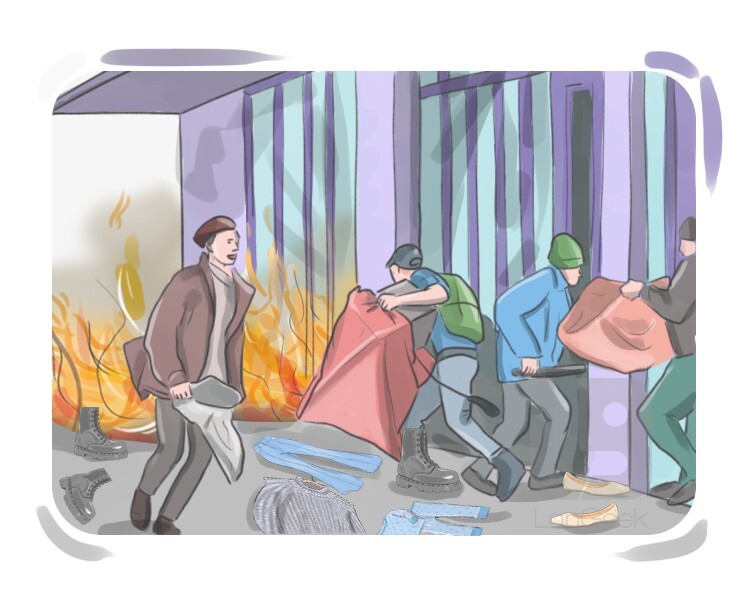
to steal goods from a place or person, especially during times of war, chaos, or civil disorder
Transitive: to plunder a place
Példák
During the invasion, the army decided to plunder the enemy's resources.
A invázió során a hadsereg úgy döntött, hogy kifosztja az ellenség erőforrásait.
02
kifoszt, birtokba vesz
to take material from artistic or academic work and use it for one's own purposes, often without permission
Transitive: to plunder intellectual property
nyelvtani információk
morfológiai összetétel
egyszerű
cselekvést jelentő ige
szabályos
jelen idő
plunder
egyes szám 3. személy
plunders
folyamatos melléknévi igenév
plundering
egyszerű múlt
plundered
befejezett melléknévi igenév
plundered
Példák
He plundered research from several papers to create his own report.
Kifosztott kutatásokat több cikkből, hogy saját jelentését készítse.
03
fosztogat, kifoszt
to engage in theft or looting, usually in a violent or chaotic manner
Intransitive
Példák
After the town was abandoned, the thieves plundered in the darkness.
A város elhagyása után a tolvajok fosztogattak a sötétben.
04
fosztogat, kifoszt
to steal goods, often by force, especially during times of chaos or disorder
Transitive: to plunder goods and valuables
Példák
The raiders plundered the merchant’s goods, taking everything of value.
A fosztogatók kifosztották a kereskedő áruit, elvéve mindent, ami értékes volt.
Plunder
01
zsákmány, prédá
property or valuables taken illegally, especially by force or during wartime
nyelvtani információk
élőségi állapot
élettelen
morfológiai összetétel
egyszerű
megszámlálhatatlan
singular
not gender specific
többes számú alak
plunders
Példák
The pirates divided the plunder after the raid.
A kalózok felosztották a zsákmányt a rajtaütés után.


