






























to plunder
01
掠夺, 抢劫
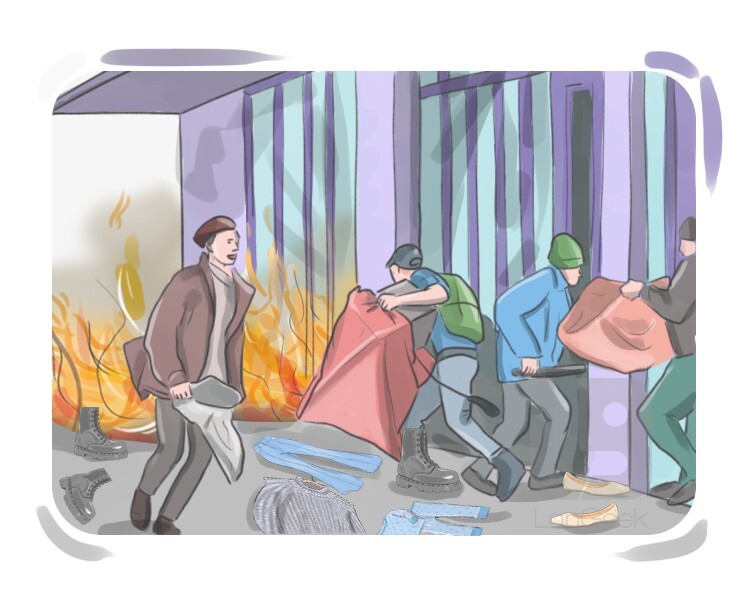
to steal goods from a place or person, especially during times of war, chaos, or civil disorder
Transitive: to plunder a place
例子
During the invasion, the army decided to plunder the enemy's resources.
在入侵期间,军队决定掠夺敌人的资源。
02
掠夺, 盗用
to take material from artistic or academic work and use it for one's own purposes, often without permission
Transitive: to plunder intellectual property
语法信息
形态构成
简单词
动作动词
规则
现在时
plunder
第三人称单数
plunders
现在分词
plundering
一般过去时
plundered
过去分词
plundered
例子
He plundered research from several papers to create his own report.
他掠夺了几篇论文的研究成果来创建自己的报告。
03
掠夺, 抢劫
to engage in theft or looting, usually in a violent or chaotic manner
Intransitive
例子
After the town was abandoned, the thieves plundered in the darkness.
小镇被遗弃后,小偷们在黑暗中掠夺。
04
掠夺, 抢劫
to steal goods, often by force, especially during times of chaos or disorder
Transitive: to plunder goods and valuables
例子
The raiders plundered the merchant’s goods, taking everything of value.
掠夺者们掠夺了商人的货物,拿走了所有值钱的东西。
Plunder
01
掠夺物, 战利品
property or valuables taken illegally, especially by force or during wartime
语法信息
有生性状态
无生命
形态构成
简单词
不可数
singular
not gender specific
复数形式
plunders
例子
The pirates divided the plunder after the raid.
海盗们在袭击后瓜分了战利品。


