

Hledat





























Colon
01
tlusté střevo, kolon
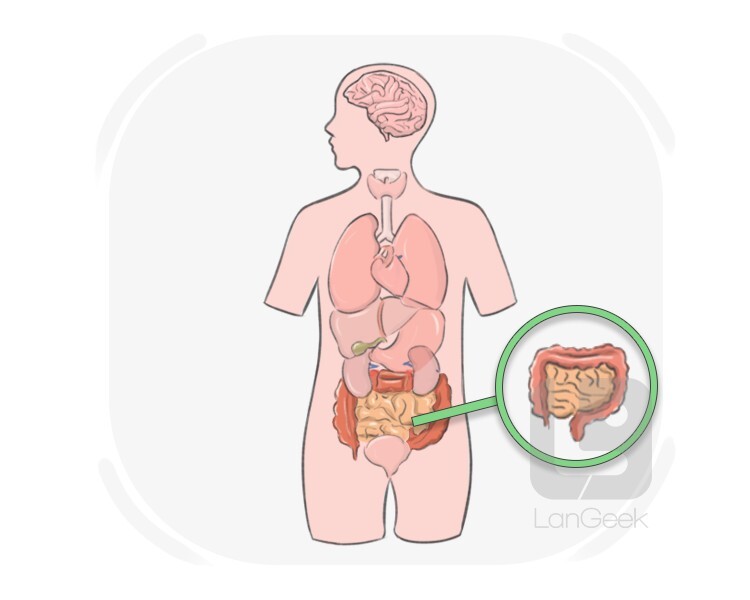
(anatomy) the main part of the large intestine, between the caecum to the rectum, where water is removed from solid waste
gramatické informace
stav životnosti
neživotný
morfologické složení
jednoduché
počitatelné
singular
not gender specific
tvar množného čísla
colons
Příklady
The colon, also known as the large intestine, is the final portion of the digestive tract responsible for absorbing water and electrolytes from undigested food matter.
Tlusté střevo, známé také jako kolon, je poslední částí trávicího traktu, která je zodpovědná za vstřebávání vody a elektrolytů z nestrávené potravy.
02
dvojtečka, znak dvojtečky
the punctuation mark : used to introduce a quotation, explanation, or list of items

Příklady
In English grammar, a colon is used to introduce a list of items: apples, oranges, bananas, and grapes.
V anglické gramatice se dvojtečka používá k uvedení seznamu položek: jablka, pomeranče, banány a hrozny.
LanGeek
Stáhněte si naši mobilní aplikaci
Lexikální Strom
colonial
colonial
colonic
colon

