

Искать





























Colon
01
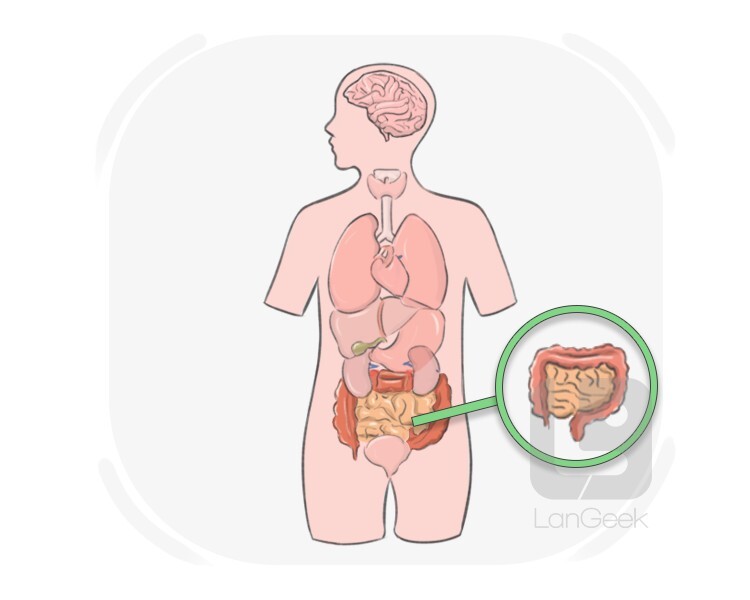
толстая кишка
(anatomy) the main part of the large intestine, between the caecum to the rectum, where water is removed from solid waste
грамматическая информация
статус одушевлённости
неодушевлённое
морфологический состав
простое
исчисляемое
singular
not gender specific
форма множественного числа
colons
Примеры
The colon, also known as the large intestine, is the final portion of the digestive tract responsible for absorbing water and electrolytes from undigested food matter.
Толстая кишка, также известная как толстый кишечник, является конечной частью пищеварительного тракта, ответственной за поглощение воды и электролитов из непереваренной пищи.

Примеры
In English grammar, a colon is used to introduce a list of items: apples, oranges, bananas, and grapes.
В английской грамматике двоеточие используется для введения списка элементов: яблоки, апельсины, бананы и виноград.
LanGeek
Скачайте наше мобильное приложение

Лексическое Дерево
colonial
colonial
colonic
colon

