

Zoeken
Selecteer de woordenboektaal





























01
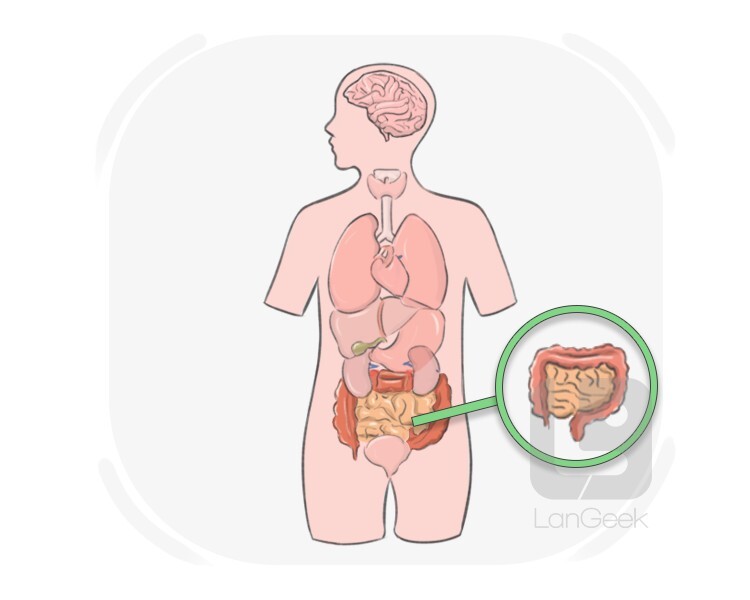
dikke darm, colon
(anatomy) the main part of the large intestine, between the caecum to the rectum, where water is removed from solid waste
grammaticale informatie
bezieldheidsstatus
onbezield
morfologische samenstelling
enkelvoudig
telbaar
singular
not gender specific
meervoudsvorm
colons
Voorbeelden
The colon, also known as the large intestine, is the final portion of the digestive tract responsible for absorbing water and electrolytes from undigested food matter.
De dikke darm, ook bekend als het colon, is het laatste deel van het spijsverteringskanaal dat verantwoordelijk is voor het opnemen van water en elektrolyten uit onverteerd voedsel.
02
dubbele punt, het dubbele puntteken
the punctuation mark : used to introduce a quotation, explanation, or list of items

Voorbeelden
In English grammar, a colon is used to introduce a list of items: apples, oranges, bananas, and grapes.
In de Engelse grammatica wordt een dubbele punt gebruikt om een lijst met items te introduceren: appels, sinaasappels, bananen en druiven.
LanGeek
Download onze mobiele app

Lexicale Boom
colonial
colonial
colonic
colon

