

Search
Select the dictionary language





























a parasitic or predatory worm of the annelid family that lives in freshwaters and drinks blood by attaching itself to its prey
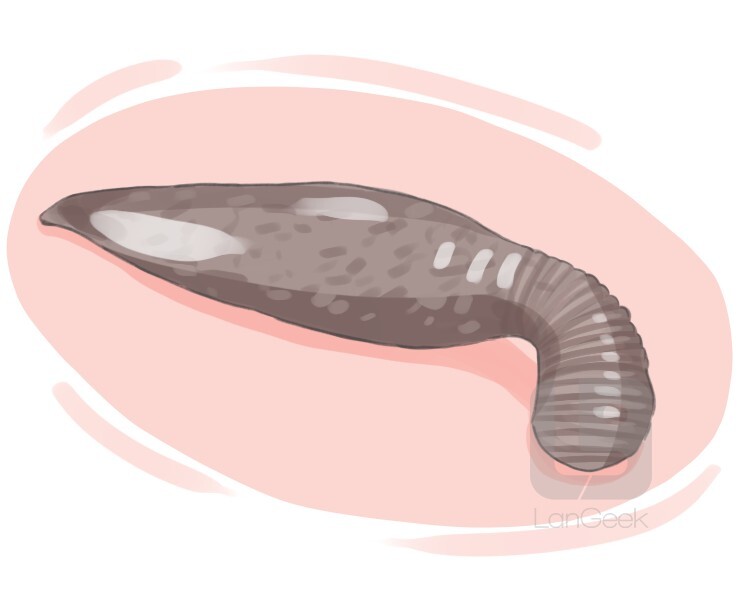
What is a "leech"?
A leech is a segmented, blood-sucking invertebrate that belongs to the class Hirudinea. It has a cylindrical body with a sucker at each end, enabling it to attach itself to the skin of its host. Leeches are typically found in freshwater environments such as ponds, swamps, and rivers. They use their powerful jaws to make small incisions in the skin and secrete an anticoagulant substance, allowing them to feed on the blood of their host. Despite their reputation as pests, leeches have been used in medicinal practices and for bloodletting in the past. They play a role in the ecosystem by helping to control populations of other organisms and by serving as a food source for various animals. Leeches have a remarkable ability to regenerate their body segments, which allows them to survive in diverse environments.
a person who exploits or depends on others for support, resources, or favors without giving anything in return
What is the origin of the term "leech" and how is it used?
"Leech" originally refers to the bloodsucking worm used in medicine, and the slang sense comes from the metaphor of someone who drains others for their own benefit. This figurative use dates back to at least the 14th–15th century in English, when writers used it to describe people who live off others without contributing. It conveys exploitation or parasitism and appears in both literary texts and everyday speech. The term is derogatory and used to criticize or insult someone seen as selfish, opportunistic, or dependent, though it can occasionally appear in humor or mild exaggeration.
draw blood
LanGeek
Download Our Mobile App

Lexical Tree

