






























radical
01
激进的
supporting total and extreme social or political changes
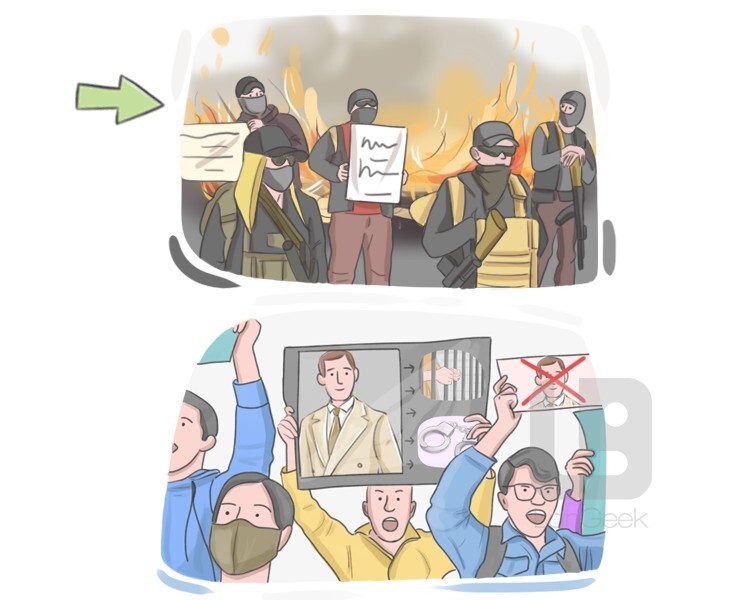
例子
The radical activist advocated for the overthrow of the government to establish a new social order.
激进活动家主张推翻政府以建立新的社会秩序。
02
激进的, 革命性的
(of actions, ideas, etc.) very new and different from the norm
语法信息
形态构成
简单词
性质形容词
最高级
most radical
比较级
more radical
可分级
领域
change, ideas, politics
例子
The scientist proposed a radical theory that challenged established beliefs.
这位科学家提出了一个挑战既定信念的激进理论。
03
根本的, 基本的
originating from or relating to the root or source of something
例子
The scientist studied the radical causes of the disease.
科学家研究了这种疾病的根本原因。
04
根本的, 基部的
(of leaves) growing at or arising from the base of a plant or directly from the root or rootstock
例子
The plant has several radical leaves sprouting at its base.
这种植物有几片基生叶从其基部萌发。
05
词根的, 根本的
of or relating to a root in language, such as the root of a word
例子
The radical of the verb conveys its essential meaning.
动词的词根传达其基本含义。
Radical
01
自由基, 官能团
a group of atoms bonded together that behaves as a single unit within a molecule
语法信息
有生性状态
抽象
形态构成
简单词
可数
singular
not gender specific
复数形式
radicals
例子
The hydroxyl radical is highly reactive and plays a key role in many chemical reactions.
羟基自由基具有高反应性,在许多化学反应中起关键作用。
02
自由基, 自由基
an atom or group of atoms with at least one unpaired electron, often highly reactive
例子
Free radicals can damage cells if not neutralized.
如果不被中和,自由基会损害细胞。
03
激进分子, 极端分子
a person who holds extreme or unconventional ideas or opinions
例子
The radical spoke passionately at the town hall.
激进分子在市政厅热情地发言。
04
部首, 基本部件
a character or component conveying the lexical meaning of a logogram
例子
The radical in the character indicates its semantic category.
字符中的部首表示其语义类别。
05
词根, 词干
the form of a word after all affixes are removed
例子
The radical of "unhappiness" is "happy."
"unhappiness"的词根是"happy"。
06
根式, 根
a quantity expressed as the root of another quantity
例子
The radical √16 equals 4.
根号 √16 等于 4。
LanGeek
下载我们的移动应用

词汇树
radicalize
radically
radical
radic

