

Szukaj





























to discriminate
01
dyskryminować
to unfairly treat a person or group of people based on their sex, race, etc.
Intransitive: to discriminate against sb
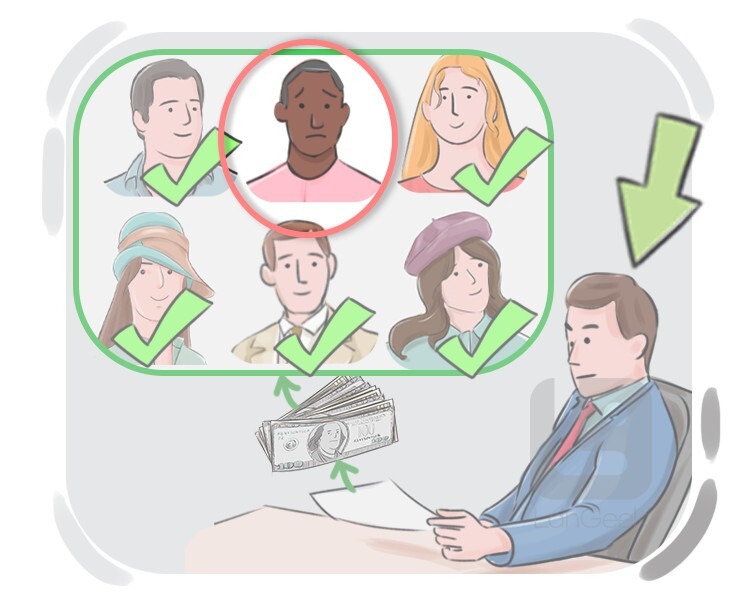
Przykłady
The company was accused of discriminating against women in its hiring practices.
Firma została oskarżona o dyskryminowanie kobiet w swoich praktykach zatrudniania.
02
rozróżniać, dyskryminować
to notice or establish a difference in or between two or more things
Transitive: to discriminate sth | to discriminate sth from sth
informacje gramatyczne
budowa morfologiczna
pochodny
czasownik czynnościowy
regularny
czas teraźniejszy
discriminate
3. osoba liczby pojedynczej
discriminates
imiesłów czynny
discriminating
czas przeszły prosty
discriminated
imiesłów bierny
discriminated
Przykłady
Good readers quickly learn to discriminate fiction from factual writing.
Dobrzy czytelnicy szybko uczą się rozróżniać fikcję od pisarstwa faktograficznego.
03
rozróżniać, odróżniać
to identify or perceive differences between two or more things, people, or ideas
Intransitive: to discriminate between two or more things
Przykłady
He can discriminate between similar shades of blue with ease.
Potrafi z łatwością rozróżniać podobne odcienie niebieskiego.
discriminate
01
dyskryminujący, zdolny do dostrzegania lub tworzenia subtelnych różnic
marked by the ability to see or make fine distinctions
informacje gramatyczne
budowa morfologiczna
przymiotnik od imiesłowu biernego
jakościowy
stopień najwyższy
most discriminate
stopień wyższy
more discriminate
stopniowalne
dziedzina
perception, judgment, discernment
LanGeek
Pobierz naszą aplikację mobilną

Drzewo Leksykalne
discriminating
discrimination
discriminator
discriminate
criminate
crime

