

Szukaj





























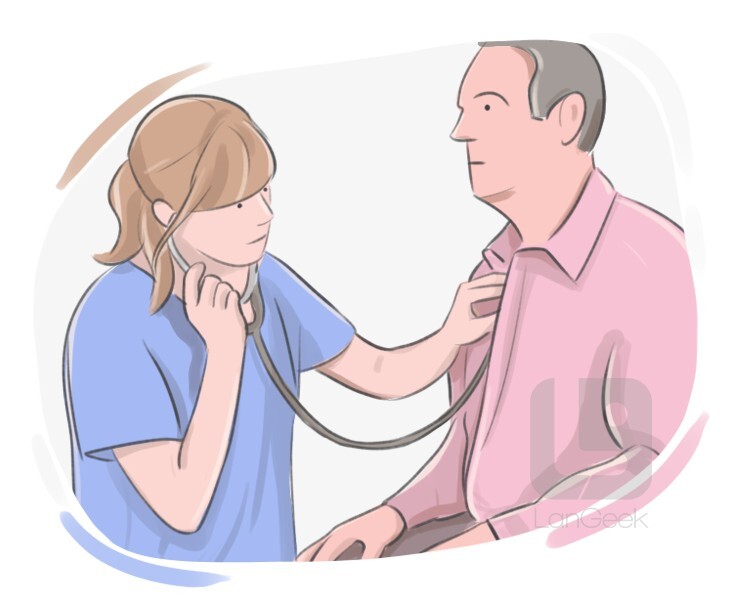
to diagnose
01
diagnozować, ustalić przyczynę
to find out the cause of a problem or disease that a person has by examining the symptoms
Transitive: to diagnose the cause of a problem
informacje gramatyczne
budowa morfologiczna
pochodny
czasownik czynnościowy
regularny
czas teraźniejszy
diagnose
3. osoba liczby pojedynczej
diagnoses
imiesłów czynny
diagnosing
czas przeszły prosty
diagnosed
imiesłów bierny
diagnosed
Przykłady
Doctors use various tests to diagnose medical conditions accurately.
Lekarze używają różnych testów, aby dokładnie zdiagnozować stany medyczne.
02
zdiagnozować, postawić diagnozę
to identify a medical condition or sickness in a person or an animal
Transitive: to diagnose sb with a disease
Przykłady
The doctor was able to diagnose the patient with a severe respiratory infection.
Lekarz był w stanie zdiagnozować u pacjenta ciężką infekcję dróg oddechowych.
03
zdiagnozować, zidentyfikować
to find out the cause of a problem or issue by carefully examining the situation or system
Przykłady
He diagnosed the issue after running several tests.
Zdiagnozował problem po przeprowadzeniu kilku testów.
LanGeek
Pobierz naszą aplikację mobilną

Drzewo Leksykalne
diagnosable
diagnosing
diagnose

