

Szukaj





























to come after
01
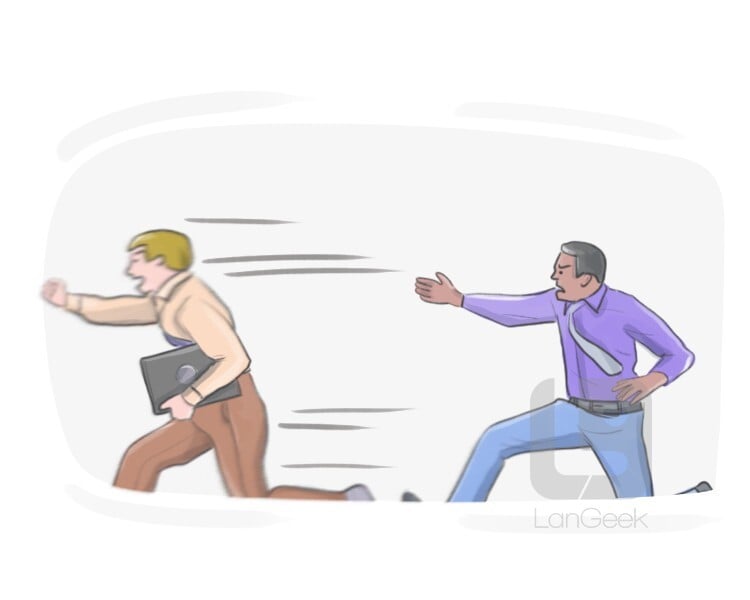
ścigać, podążać za
to follow or chase someone, often with the intent of catching or reaching them
Transitive: to come after sb/sth
informacje gramatyczne
budowa morfologiczna
frazowe
czasownik ruchu
regularny
nierozdzielny
partykuła
after
czasownik podstawowy
come
czas teraźniejszy
come after
3. osoba liczby pojedynczej
comes after
imiesłów czynny
coming after
czas przeszły prosty
came after
imiesłów bierny
come after
Przykłady
The dog escaped from the backyard, and the children came after it, trying to bring it back home.
Pies uciekł z podwórka, a dzieci poszły za nim, próbując zabrać go z powrotem do domu.
02
następować, przychodzić po
to come as a result of something, often at a later time
Transitive: to come after sth
Przykłady
The rainy season comes after the dry season in this region.
Pora deszczowa następuje po porze suchej w tym regionie.
03
następować po, przejmować stanowisko
to assume a position or role in succession to another person or entity
Transitive: to come after sb/sth
Przykłady
John retired, and his son is set to come after him as the CEO of the company.
John przeszedł na emeryturę, a jego syn jest gotowy zastąpić go jako prezes firmy.
LanGeek


