

Keresés
Válassza ki a szótár nyelvét





























to come after
01
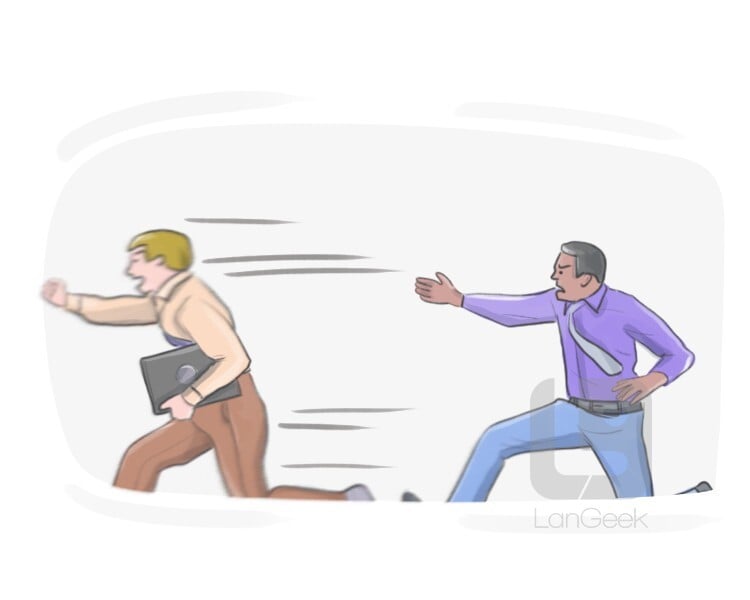
üldöz, követ
to follow or chase someone, often with the intent of catching or reaching them
Transitive: to come after sb/sth
nyelvtani információk
morfológiai összetétel
frazális
mozgást jelentő ige
szabályos
elválaszthatatlan
partikula
after
alapige
come
jelen idő
come after
egyes szám 3. személy
comes after
folyamatos melléknévi igenév
coming after
egyszerű múlt
came after
befejezett melléknévi igenév
come after
Példák
The dog escaped from the backyard, and the children came after it, trying to bring it back home.
A kutya kiszökött a hátsó udvarból, és a gyerekek utána mentek, próbálták hazahozni.
02
követ, utána jön
to come as a result of something, often at a later time
Transitive: to come after sth
Példák
The rainy season comes after the dry season in this region.
Az esős évszak követi a száraz évszakot ezen a területen.
03
után következik, átveszi a pozíciót
to assume a position or role in succession to another person or entity
Transitive: to come after sb/sth
Példák
John retired, and his son is set to come after him as the CEO of the company.
John nyugdíjba ment, és fia kész utána lépni a vállalat vezérigazgatójaként.
LanGeek


