

Zoeken
Selecteer de woordenboektaal





























01
naar
used to say where someone or something goes
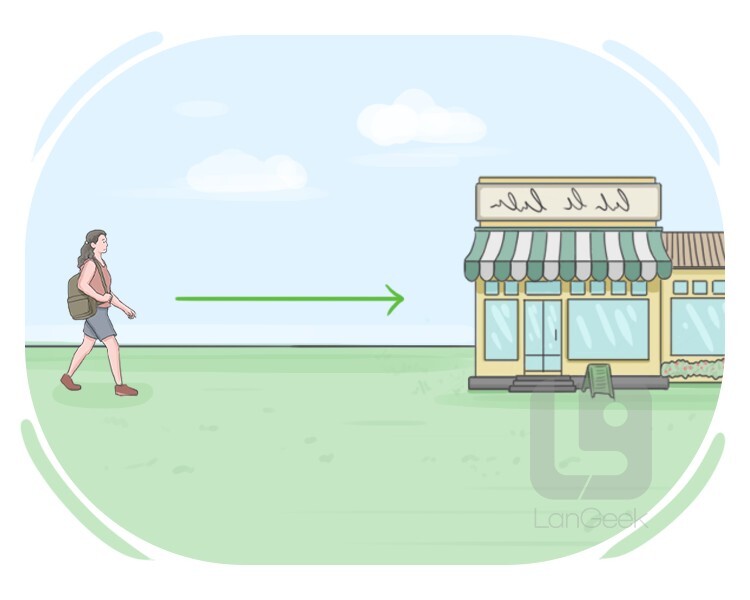
grammaticale informatie
Voorbeelden
He rode his bicycle to the store to buy some groceries.
Hij reed met zijn fiets naar de winkel om wat boodschappen te kopen.

Voorbeelden
It's ten minutes to three.
Het is tien voor drie.
03
naar, richting
used to express the location or direction relative to a specified point of reference
Voorbeelden
The bookstore is to the left of the cafe.
De boekwinkel is aan de linkerkant van het café.
04
naar
used to express a shift or alteration in a state, condition, or situation
Voorbeelden
The weather went from sunny to stormy.
Het weer veranderde van zonnig naar stormachtig.
05
naar
used to express the recipient or target of an action, behavior, or attitude
Voorbeelden
She was kind to her coworkers.
Ze was vriendelijk tegen haar collega's.
06
aan
used to express a connection, association, or relationship between individuals
Voorbeelden
she's married to Chris.
Ze is getrouwd met Chris.
07
volgens, voor
used to indicate the criteria or parameter according to which something is defined or customized
Voorbeelden
The meal was prepared to order.
De maaltijd werd bereid volgens bestelling.
08
tegen
used to express a rate of exchange between two quantities
Voorbeelden
The currency exchange rate is one euro to two dollars.
De wisselkoers is één euro voor twee dollar.
09
naar
used to indicate the target or the party affected by an action or circumstance
Voorbeelden
The message was a warning to potential intruders.
Het bericht was een waarschuwing voor potentiële indringers.
10
dan
used to express a comparison between two entities
Voorbeelden
The speed of the car is inferior to that of the racing car.
De snelheid van de auto is lager dan die van de raceauto.
11
tot
used to indicate the endpoint, destination, or conclusion of a range, distance, or period
Voorbeelden
The temperature ranges from 20 to 30 degrees Celsius.
De temperatuur varieert van 20 tot 30 graden Celsius.
to
01
te
used as a marker for infinitive clauses, indicating the base form of a verb that follows it, often expressing purpose, intention, or action

Voorbeelden
She loves to read before bedtime.
Ze houdt ervan om voor het slapengaan te lezen.
LanGeek


