

অনুসন্ধান করুন
অভিধানের ভাষা নির্বাচন করুন





























to hew
01
কাটা, ছাঁটা
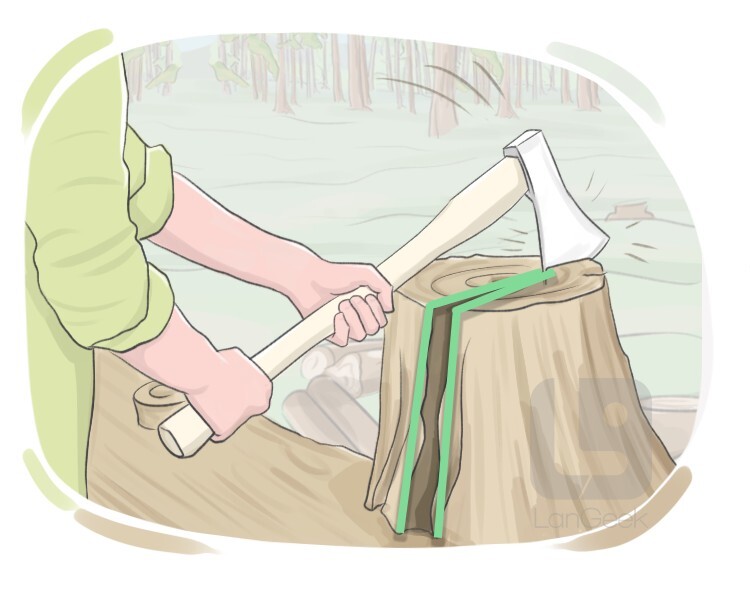
to cut something by striking it with an axe or similar tool
Transitive: to hew wood, stone, or other materials
ব্যাকরণগত তথ্য
রূপগত গঠন
সরল
কর্মসূচক ক্রিয়া
নিয়মিত
বর্তমান কাল
hew
৩য় পুরুষ একবচন
hews
বর্তমান কৃদন্ত
hewing
সরল অতীত
hewed
অতীত কৃদন্ত
hewn
উদাহরণ
The lumberjack skillfully hewed the massive tree with precise axe strikes.
কাঠুরে দক্ষতার সাথে সঠিক কুড়ালের আঘাতে বিশাল গাছটি কেটেছে।
02
কাটা, গঠন করা
to create or form an object by cutting or shaping a material like wood or stone
Transitive: to hew an object from wood or other materials | to hew an object out of wood or other materials
উদাহরণ
The carpenter hewed a beautiful sculpture from a block of wood.
কাঠমিস্ত্রি কাঠের একটি ব্লক থেকে একটি সুন্দর মূর্তি কাটল।
LanGeek
আমাদের মোবাইল অ্যাপ ডাউনলোড করুন

শব্দতাত্ত্বিক গাছ
hewer
hew

