

অনুসন্ধান করুন
অভিধানের ভাষা নির্বাচন করুন





























to double-cross
01
বিশ্বাসঘাতকতা করা, প্রতারণা করা
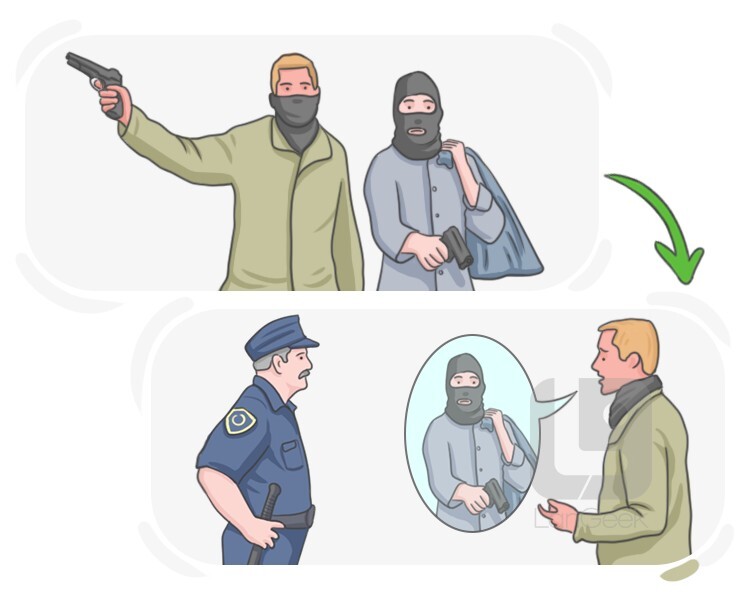
to betray a person that one is in cooperation with, often when they want to do something illegal together
Transitive: to double-cross a person or organization
ব্যাকরণগত তথ্য
রূপগত গঠন
যৌগিক
কর্মসূচক ক্রিয়া
নিয়মিত
বর্তমান কাল
double-cross
৩য় পুরুষ একবচন
double-crosses
বর্তমান কৃদন্ত
double-crossing
সরল অতীত
double-crossed
অতীত কৃদন্ত
double-crossed
উদাহরণ
The criminal double-crossed his partner by taking the stolen goods and fleeing with them alone.
অপরাধী চুরি করা জিনিসপত্র নিয়ে একা পালিয়ে গিয়ে তার সঙ্গীকে বিশ্বাসঘাতকতা করেছিল।
Double-cross
01
বিশ্বাসঘাতকতা, প্রতারণা
an act of betrayal, especially one involving deceit against an ally or partner
ব্যাকরণগত তথ্য
প্রাণবাচকতার অবস্থা
বিমূর্ত
রূপগত গঠন
যৌগিক
গণনীয়
singular
not gender specific
বহুবচন রূপ
double-crosses
উদাহরণ
He suffered a double-cross when his partner stole the plans.
তিনি একটি বিশ্বাসঘাতকতা ভোগ করেছিলেন যখন তার অংশীদার পরিকল্পনাগুলি চুরি করেছিলেন।
LanGeek


