

অনুসন্ধান করুন
অভিধানের ভাষা নির্বাচন করুন





























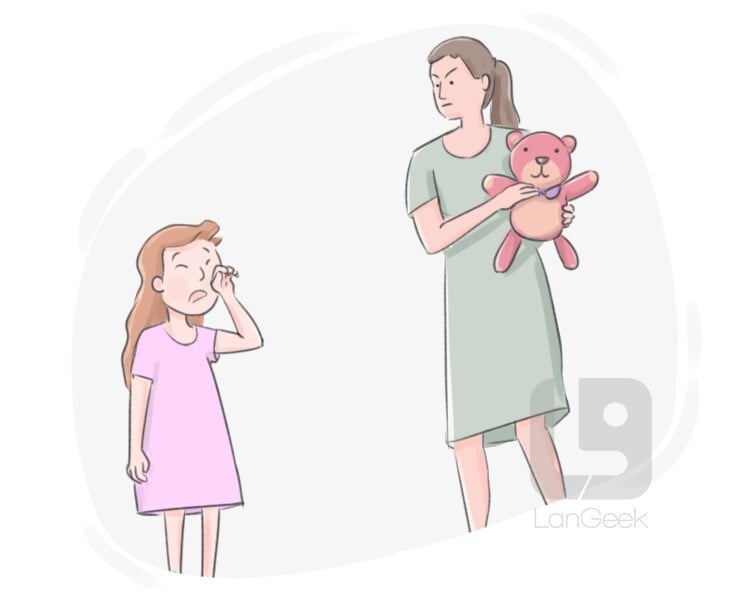
to deprive
01
বঞ্চিত করা, কেড়ে নেওয়া
to prevent someone from having something, particularly something that they need
Transitive: to deprive sb of sth
ব্যাকরণগত তথ্য
রূপগত গঠন
সরল
কর্মসূচক ক্রিয়া
নিয়মিত
বর্তমান কাল
deprive
৩য় পুরুষ একবচন
deprives
বর্তমান কৃদন্ত
depriving
সরল অতীত
deprived
অতীত কৃদন্ত
deprived
উদাহরণ
The harsh weather deprived the hikers of proper shelter.
কঠোর আবহাওয়া হাইকারদের সঠিক আশ্রয় থেকে বঞ্চিত করেছে।
02
বঞ্চিত করা, কেড়ে নেওয়া
to take away or remove something from someone
Transitive: to deprive sb of a possession
উদাহরণ
The thief deprived the homeowner of valuable possessions.
চোর গৃহকর্তাকে মূল্যবান সম্পত্তি থেকে বঞ্চিত করেছে।
03
বঞ্চিত করা, পদচ্যুত করা
to remove someone from their official position or authority, particularly a religious leader
Transitive: to deprive a clergyman
উদাহরণ
The church council decided to deprive the priest of his position due to misconduct.
গির্জা পরিষদ অসদাচরণের কারণে পুরোহিতকে তার পদ থেকে বঞ্চিত করার সিদ্ধান্ত নিয়েছে।
LanGeek
আমাদের মোবাইল অ্যাপ ডাউনলোড করুন

শব্দতাত্ত্বিক গাছ
deprivation
deprived
deprive

