

অনুসন্ধান করুন
অভিধানের ভাষা নির্বাচন করুন





























Aristocracy
01
অভিজাততন্ত্র, কুলীন সম্প্রদায়
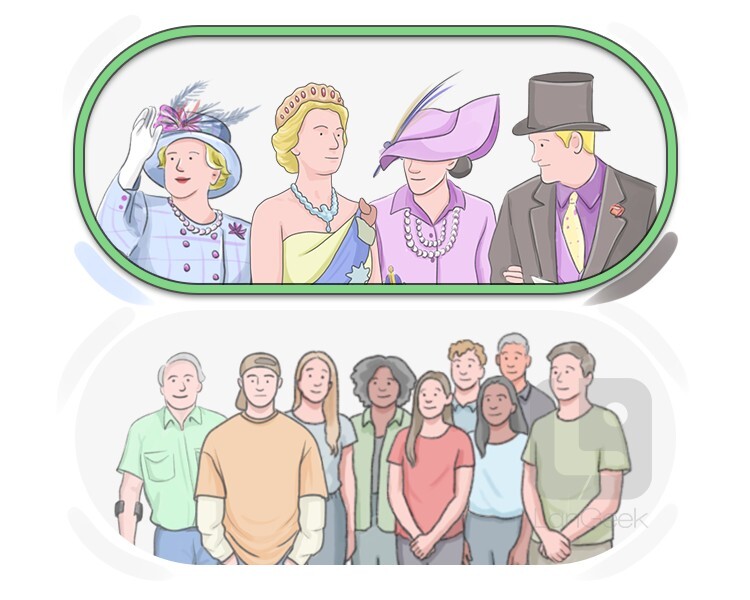
people in the highest class of society who have a lot of power and wealth and usually high ranks and titles
ব্যাকরণগত তথ্য
প্রাণবাচকতার অবস্থা
মানুষ
রূপগত গঠন
যৌগিক
অগণনীয়
singular
not gender specific
বহুবচন রূপ
aristocracies
উদাহরণ
The event was attended by members of the aristocracy in elegant attire.
এই অনুষ্ঠানে অভিজাত শ্রেণির সদস্যরা মার্জিত পোশাকে উপস্থিত ছিলেন।
02
অভিজাততন্ত্র
a group of people of high rank or superiority in a particular social sphere
উদাহরণ
The literary aristocracy shaped public taste for decades.
সাহিত্যিক অভিজাত শ্রেণী দশক ধরে জনসাধারণের রুচি গঠন করেছিল।
03
অভিজাততন্ত্র
a form of government in which a minority who is believed to be the most qualified has the power
উদাহরণ
Aristocracy was once seen as a safeguard against mob rule.
অভিজাততন্ত্র একসময় জনতার শাসনের বিরুদ্ধে একটি রক্ষাকবচ হিসেবে দেখা হতো।
LanGeek


