

Search
Select the dictionary language





























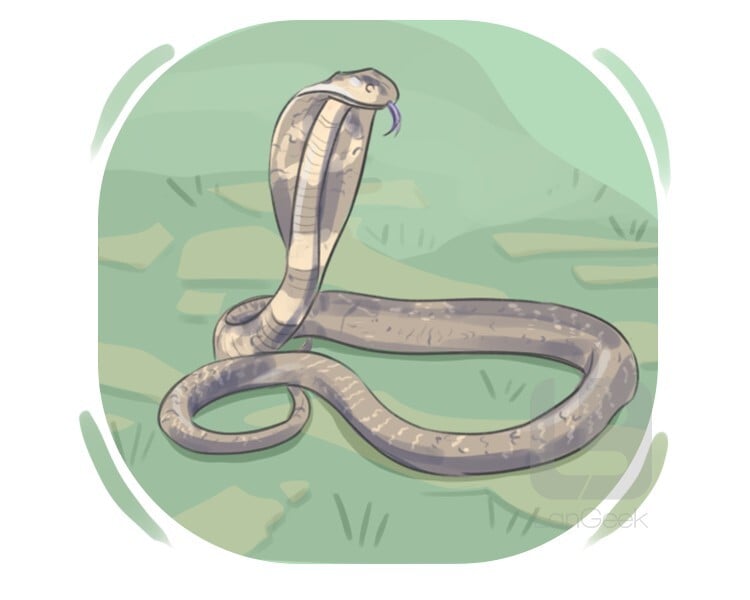
What is a "snake"?
A snake is a legless reptile characterized by its elongated body and unique ability to slither. It comes in various sizes, colors, and patterns, adapting to different environments worldwide. The snake has a flexible jaw structure that allows it to consume prey larger than its own head size. It is carnivorous, feeding on a wide range of animals such as rodents, birds, and insects. Some snake species possess venomous fangs for capturing and subduing their prey, while others rely on constriction. Snakes play essential roles in ecosystems as both predators and prey, contributing to the ecological balance. Despite being often misunderstood, snakes are fascinating creatures with remarkable adaptations that enable them to thrive in diverse habitats.
a person treacherous, deceitful, or willing to betray others

What is the origin of the term "snake" and how is it used?
"Snake" is a slang term used to describe a person who is treacherous, deceitful, or willing to betray others. It comes from the literal snake, an animal long associated in Western culture with cunning, danger, and betrayal—most famously in the biblical story of the Garden of Eden. The term has been used metaphorically in English for centuries and appears in informal, social, literary, and political contexts to warn against or criticize untrustworthy behavior. It is moderately to strongly derogatory, aimed at character rather than appearance, and conveys moral condemnation.
any object that is long, thin, and flexible, resembling the shape or movement of a snake
a long, flexible steel cable used to clear clogs in pipes, especially curved or obstructed ones
a faint, long constellation in the southern hemisphere, located near the equator between Virgo and Cancer
to glide in a winding, sinuous motion
to travel along a twisting or curving route
LanGeek
Download Our Mobile App

Lexical Tree

