






























Orbit
01
轨道, 运行轨道
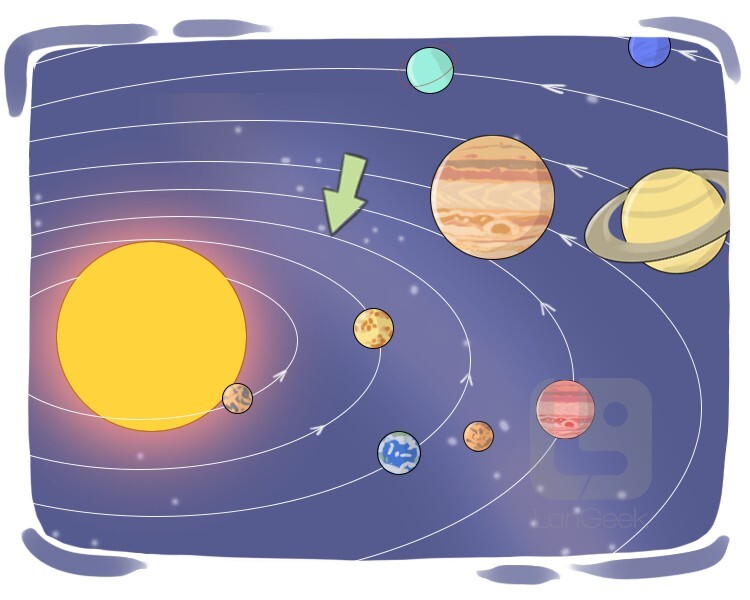
the path an object in the space follows to move around a planet, star, etc.
语法信息
有生性状态
无生命
形态构成
简单词
可数
singular
not gender specific
复数形式
orbits
例子
The satellite was placed into a stable orbit to continuously monitor weather patterns from space.
卫星被放置在一个稳定的轨道上,以从太空持续监测天气模式。
02
影响范围, 活动范围
an area in which something operates, exerts influence, or holds power
例子
The corporation extended its orbit into international markets.
该公司将其轨道扩展到了国际市场。
03
领域, 轨道
a particular environment, sphere, or walk of life
例子
She moved in the orbit of the fashion industry.
她在时尚产业的轨道中移动。
04
眼眶, 眼窝
the hollow in the skull that holds and supports the eyeball
例子
The fracture damaged the orbit around his eye.
骨折损伤了他眼睛周围的眼眶。
05
轨道, 路径
the path followed by an electron around an atom's nucleus
例子
The orbit of an electron affects chemical bonding.
电子的轨道影响化学键合。
to orbit
01
绕轨道运行, 环绕
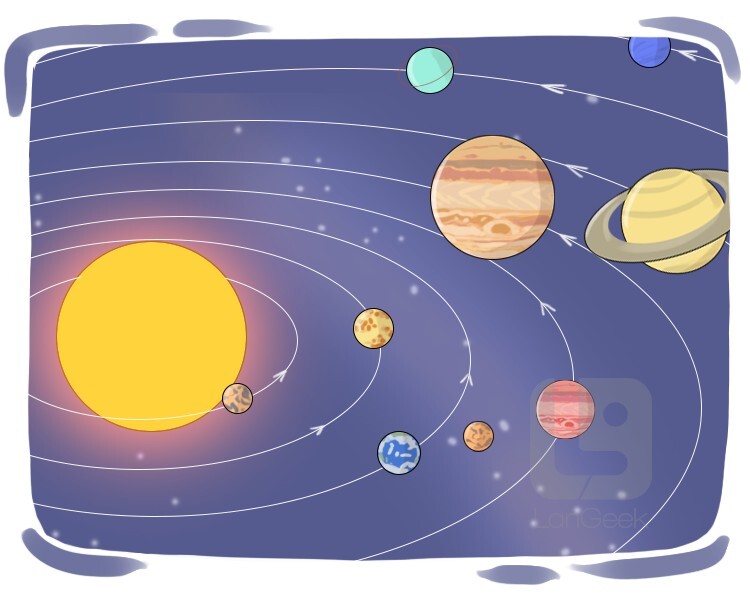
to move around a star, planet, or a large object in space
Transitive: to orbit a planet or star | to orbit around a planet or star
语法信息
形态构成
简单词
运动动词
规则
现在时
orbit
第三人称单数
orbits
现在分词
orbiting
一般过去时
orbited
过去分词
orbited
例子
The moon orbits around the Earth once every 27.3 days.
月球每27.3天绕地球公转一周。


