






























Salt
01
소금, 염화 나트륨
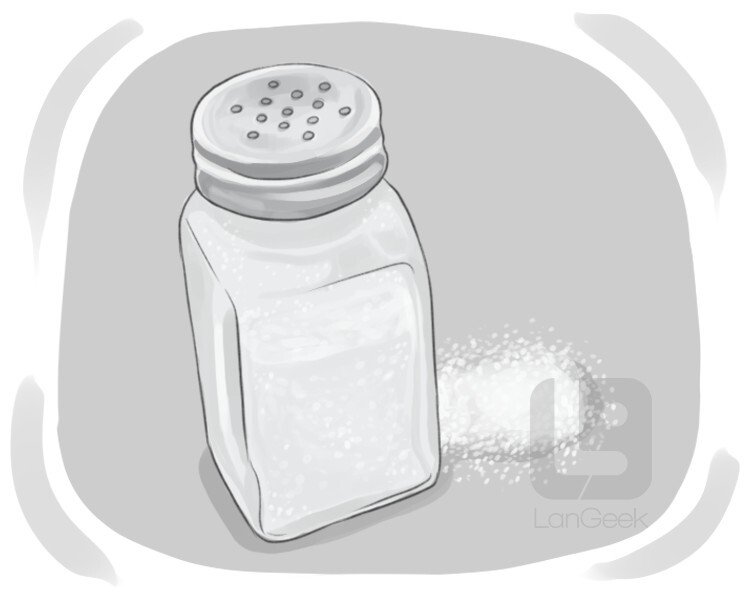
a natural, white substance, obtained from mines and also found in seawater that is added to the food to make it taste better or to preserve it
문법 정보
유생성 상태
무생물
형태적 구성
단순어
불가산
singular
not gender specific
복수형
salts
예시들
Can you please pass the salt?
소금을 건네주시겠어요?
02
소금, 염화 나트륨
a compound formed by replacing hydrogen in an acid by a metal (or a radical that acts like a metal)
03
소금, 짠맛
the taste experience when common salt is taken into the mouth
04
전략 무기 제한 협상, SALT
negotiations between the United States and the Union of Soviet Socialist Republics opened in 1969 in Helsinki designed to limit both countries' stock of nuclear weapons
to salt
01
소금을 넣다, 간을 하다
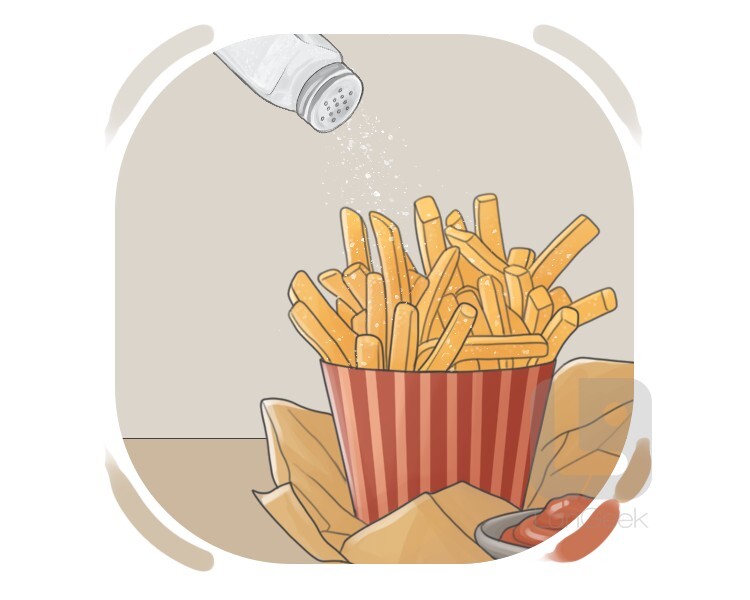
to add salt to food or another substance in order to enhance its flavor
Transitive: to salt food
문법 정보
형태적 구성
단순어
동작 동사
규칙
현재 시제
salt
3인칭 단수
salts
현재분사
salting
단순 과거
salted
과거분사
salted
예시들
She salts the pasta water to season it before boiling.
그녀는 끓이기 전에 파스타 물에 맛을 내기 위해 소금을 넣습니다.
02
소금에 절이다, 염장하다
to preserve food by applying salt to prevent spoilage
Transitive: to salt food
예시들
In the past, people would salt fish to keep it from going bad.
과거에는 사람들이 물고기가 상하지 않도록 소금에 절였습니다.
03
양념하다, 생기불어넣다
to add zest, excitement, or intrigue to something
Transitive: to salt sth
예시들
The speaker salted his presentation with intriguing facts to keep the audience engaged.
발표자는 청중의 관심을 유지하기 위해 흥미로운 사실로 프레젠테이션을 풍미있게 만들었습니다.
04
뿌리다, 살짝 뿌리다
to scatter or sprinkle something lightly in a way that covers a surface evenly
Transitive: to salt sth with sth
예시들
He salted the flowers with glitter to give them a shimmering effect.
그는 꽃에 반짝이는 효과를 주기 위해 글리터를 뿌렸다.
salt
01
쓴, 신랄한
(of speech) painful or bitter
문법 정보
형태적 구성
단순어
성질형
최상급
saltest
비교급
salter
등급화 가능
분야
speech, emotion, language
LanGeek
모바일 앱 다운로드

어휘 나무
saltlike
salty
salt

