

Rechercher
Sélectionnez la langue du dictionnaire





























to depress
01
déprimer, attrister
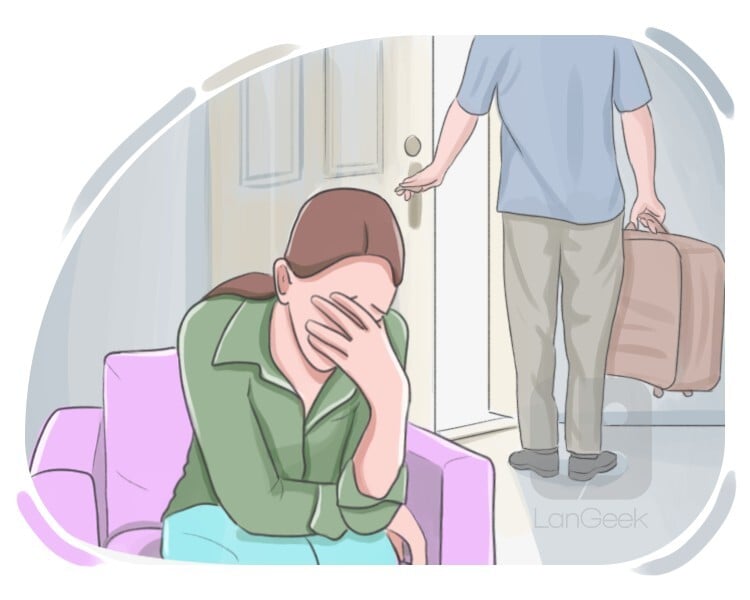
to make someone feel extremely sad or discouraged, often as a result of challenging situations, such as loss
Transitive: to depress sb
informations grammaticales
composition morphologique
dérivé
verbe d’action
régulier
présent
depress
3e personne du singulier
depresses
participe présent
depressing
passé simple
depressed
participe passé
depressed
Exemples
The constant rain seemed to depress him even more.
La pluie constante semblait le déprimer encore plus.
02
déprécier, abaisser
to lower the market value or reduce the market appeal of a product
Transitive: to depress a product or its value
Exemples
Overproduction of a certain product may depress its market value as supply exceeds demand.
La surproduction d'un certain produit peut déprimer sa valeur marchande lorsque l'offre dépasse la demande.
03
réduire, diminuer
to reduce the intensity, activity, or strength of something
Transitive: to depress a process or state
Exemples
The medication helped depress his symptoms of anxiety.
Le médicament a aidé à réduire ses symptômes d'anxiété.
04
appuyer, enfoncer
to apply force that pushes something downward
Transitive: to depress sth
Exemples
The mechanic depressed the lever to release the brake.
Le mécanicien a enfoncé le levier pour relâcher le frein.
05
abaisser, affaisser
to lower or cause to move downward in position
Transitive: to depress sth
Exemples
The weight of the snow depressed the branches of the tree, bending them towards the ground.
Le poids de la neige a abaissé les branches de l'arbre, les courbant vers le sol.
LanGeek
Téléchargez notre application mobile

Arbre Lexical
depressant
depressed
depressing
depress

