

Rechercher
Sélectionnez la langue du dictionnaire





























to cackle
01
ricaner, glousser méchamment
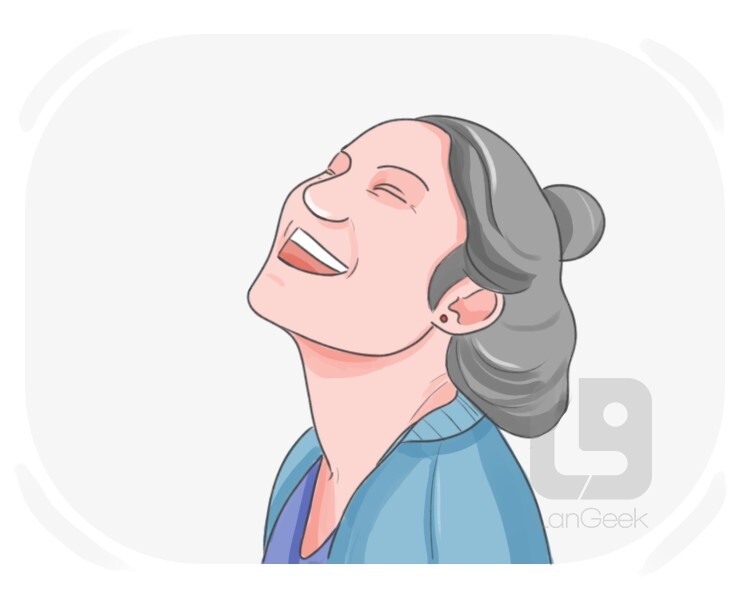
to laugh loudly and harshly, often in a way that sounds unpleasant or wicked
Intransitive
Exemples
The wicked witch in the story began to cackle after casting her spell.
La méchante sorcière dans l'histoire a commencé à ricaner après avoir jeté son sort.
02
caqueter, glousser
to make a harsh, sharp, and raucous vocalization characteristic of hens after laying an egg or when disturbed
Intransitive
informations grammaticales
composition morphologique
simple
verbe d’action
régulier
présent
cackle
3e personne du singulier
cackles
participe présent
cackling
passé simple
cackled
participe passé
cackled
Exemples
The hen began to cackle loudly after laying her egg in the coop.
La poule a commencé à caqueter bruyamment après avoir pondu son œuf dans le poulailler.
03
glousser, caqueter
to talk in a rapid, high-pitched, and often excited or unrestrained manner
Intransitive
Exemples
The group of friends began to cackle about their weekend plans.
Le groupe d'amis a commencé à glousser à propos de leurs projets pour le week-end.
Cackle
01
caquètement, rire bruyant
a loud laugh suggestive of a hen's cackle
informations grammaticales
statut d’animéité
abstrait
composition morphologique
composé
dénombrable
singular
not gender specific
forme plurielle
cackles
02
bavardage bruyant, jacassement
noisy talk
03
caquètement, gloussement
the sound made by a hen after laying an egg


